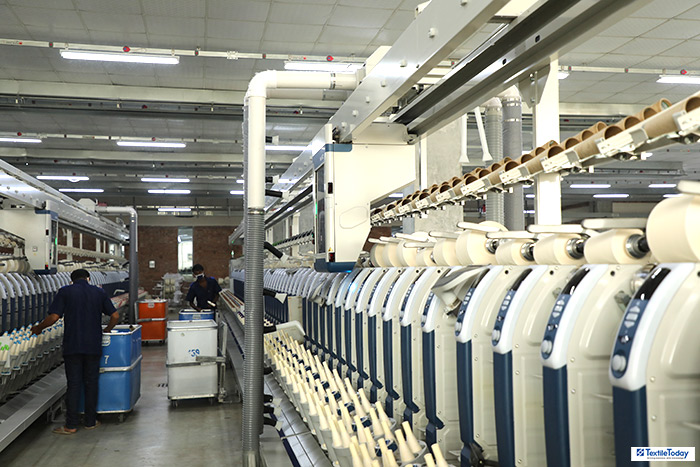
Textile Engineering Courses
Starting From
₹58,000 /- Per Year

About Course
Textile Engineering courses focus on the design, production, and processing of textiles. This field covers a broad range of subjects including textile manufacturing, fabric technology, dyeing, finishing, and quality control. Students gain hands-on experience with the latest machinery and technologies used in the textile industry. The course prepares individuals for careers in textile production, garment manufacturing, fabric research, and textile design. Textile Engineering is offered at various levels including Bachelor's, Master's, and Ph.D. degrees.
The curriculum typically includes subjects like fiber science, textile machinery, textile chemistry, and polymer engineering. Students can specialize in areas such as fabric design, textile technology, and textile management. Textile Engineering is a rapidly growing field with significant demand for skilled professionals in both the domestic and international markets. Graduates can pursue careers in textile production companies, garment manufacturers, textile research labs, and even in design studios. The scope for career growth is immense, with opportunities in both the public and private sectors.

Course Scope
The scope of Textile Engineering courses is vast and ever-expanding, offering numerous opportunities in various industries. Graduates can work in textile production, garment manufacturing, fabric research, quality control, and textile machinery design. With the increasing demand for high-performance fabrics, innovative textile materials, and sustainable textile production, professionals in this field are highly sought after.
Career opportunities exist in sectors such as textile mills, fashion and garment companies, textile research institutes, and textile machinery manufacturing. Additionally, there is significant demand for textile engineers in companies focusing on sustainable and eco-friendly textile production. The field also offers opportunities in design, textile product development, and textile testing.
Textile engineers can take on roles in fabric development, textile production management, quality assurance, and supply chain management. With technological advancements, professionals are also working in areas like digital textile printing, nanotechnology, and smart textiles, further expanding the scope of this field.
In conclusion, the scope of Textile Engineering is wide-ranging, with opportunities for growth in both traditional textile industries and newer, innovative sectors. The global textile market continues to grow, providing long-term career prospects for graduates.

Course Syllabus & Subjects
Course Subjects for Textile Engineering Courses
Textile Engineering is a diverse field that covers various aspects of textile production, design, manufacturing processes, and technology. Here are the key subjects you would typically study during a Textile Engineering course:
1. Core Subjects for B.Tech/B.E. in Textile Engineering:
Textile Fibers & Yarn Manufacturing: Understanding the different types of fibers, their properties, and yarn production processes.
Fabric Manufacturing: Techniques used in the production of fabrics such as weaving, knitting, and nonwoven fabric production.
Textile Chemistry: The study of chemical processes used in textile processing, including dyeing, printing, and finishing.
Textile Testing & Quality Control: Methods to test textile materials for quality, durability, and performance.
Textile Machinery & Equipment: Detailed study of machines used in textile production, such as spinning, weaving, and knitting machines.
Apparel Manufacturing: Involves the study of garment production, design, pattern making, and apparel manufacturing processes.
Knitting & Weaving Technology: Focuses on fabric formation processes through knitting and weaving techniques.
Textile Engineering Materials: The study of various materials used in textiles, such as polymers, fibers, and composites.
Technical Textiles: Advanced textiles used in specialized applications, including medical, automotive, and geotechnical textiles.
Sustainable Textile Processing: Focus on environmentally friendly practices and sustainability in textile manufacturing.
2. Core Subjects for M.Tech in Textile Engineering:
Advanced Textile Materials: Study of innovative and smart textiles for specialized applications.
Textile Product Design & Development: Methods of designing and developing new textile products.
Textile Engineering Management: Focus on managing textile manufacturing units and supply chains.
Nonwoven Fabric Technology: The production of nonwoven fabrics and their applications.
Textile Nanotechnology: The application of nanotechnology in textile fibers and fabric manufacturing.
Textile Marketing & Distribution: Study of textile product marketing strategies and distribution channels.
Textile Waste Management & Recycling: Methods of recycling and managing waste in the textile industry.
Textile Testing & Standards: In-depth understanding of global textile standards and testing procedures.
Questions about the Textile Engineering Courses?
Let our experts provide the answers – talk to us today!


Course Eligibility
Course Eligibility for Textile Engineering Courses
Textile Engineering is an interdisciplinary field that combines principles of engineering, design, and textile manufacturing to create fabric-based products. The eligibility criteria for Textile Engineering courses may vary depending on the level of the course (undergraduate, postgraduate, etc.) and the institution. Here’s a general guideline:
1. Eligibility for B.Tech/B.E. in Textile Engineering (Undergraduate Level)
Educational Qualifications:
Completion of Class 12 (or equivalent) from a recognized board with Physics, Chemistry, and Mathematics as compulsory subjects.
A minimum aggregate score of 50% to 60% in Class 12 (the exact percentage may vary based on the institution).
Entrance Exams:
Most institutes admit students based on performance in national or state-level entrance exams, such as JEE Main, JEE Advanced, or specific college entrance exams. Some institutions may conduct their own entrance tests.
Age Limit:
The age limit generally ranges from 17 to 25 years, but it may vary depending on the specific university or institution.
Other Requirements:
Proficiency in English (for some institutions) and other basic qualifications like medical fitness may also be required.
2. Eligibility for M.Tech/M.S. in Textile Engineering (Postgraduate Level)
Educational Qualifications:
A Bachelor’s degree (B.Tech/B.E.) in Textile Engineering, Fashion Technology, or a related field from a recognized university or institute.
A minimum of 50% to 60% in the undergraduate course (this may vary depending on the institution).
Entrance Exams:
Most institutions admit students based on national-level exams like GATE (Graduate Aptitude Test in Engineering) or institute-specific entrance exams.
Some universities may also conduct a personal interview and written test as part of the selection process.
Other Requirements:
Some institutions may require a valid scorecard of standardized exams like GRE for foreign universities.
A good understanding of topics related to textile technology, material science, designing, and engineering is essential.
3. Eligibility for PhD in Textile Engineering (Doctoral Level)
Educational Qualifications:
A Master's degree in Textile Engineering, Fiber Science, Fashion Technology, or related fields with a minimum of 55% (or as per institutional norms).
Some universities may also require work experience in the textile industry or research.
Entrance Exams:
PhD entrance exams conducted by individual universities or institutes (such as the UGC-NET for Indian institutions) may be required.
Alternatively, candidates with a valid GATE score or a Master’s degree in a relevant field may be exempt from entrance exams.
Other Requirements:
Research proposals or a statement of purpose (SOP) related to the field of study.
Experience in textile manufacturing or research may be beneficial for admission.
Key Points to Remember:
Eligibility criteria can vary by institution, so it's essential to check specific university or institute guidelines before applying.
Candidates should have a strong background in mathematics, science, and engineering principles.
A passion for textile design, technology, and sustainability is crucial for those pursuing a career in textile engineering.
These eligibility details will help guide prospective students interested in entering the field of textile engineering.

Course Level
Textile Engineering courses are typically offered at various academic levels, including:
Diploma Level: These are short-term courses that provide foundational knowledge in textile manufacturing, fabric types, and the basics of textile machinery. The diploma courses usually last 1 to 2 years and are ideal for those who want to enter the textile industry quickly.
Undergraduate Level (B.Tech/B.Sc): A Bachelor's degree in Textile Engineering or Textile Technology is generally a 3 to 4-year program. It provides students with in-depth knowledge of textile processes, textile design, fabric production, and engineering applications in the textile industry.
Postgraduate Level (M.Tech/M.Sc): For advanced specialization, a Master's degree in Textile Engineering or Textile Technology can be pursued. These courses typically last 2 years and offer deeper insights into areas like textile research, textile materials, and advanced machinery design.
Doctorate Level (Ph.D.): For those interested in academic research or high-level industry roles, a Ph.D. in Textile Engineering provides an opportunity to conduct advanced research in specialized fields such as sustainable textiles, smart fabrics, or textile machinery innovation.
Each level opens up specific career paths, with higher levels generally leading to more specialized and higher-paying roles in the industry.
Confused about the course content?
Get clarity from our experts – start the conversation!
Similar Courses
Recruiters
Top Recruiters for Textile Engineering Graduates:
Textile Engineering is a vast field, and graduates can find career opportunities in various sectors, including manufacturing, design, research, and management. Here are some of the top recruiters in the textile engineering industry:
1. Textile Manufacturing Companies:
- Arvind Limited
- Vardhman Textiles
- Raymond Limited
- Welspun India Ltd.
- Jindal Worldwide Ltd.
- Bombay Dyeing
- Trident Group
- S. Kumar’s Nationwide Ltd.
2. Apparel and Fashion Brands:
- Levi’s
- Nike
- Adidas
- Pantaloons
- H&M
- Zara
- Uniqlo
3. Textile Research & Development:
- Indian Institute of Technology (IITs)
- National Institute of Fashion Technology (NIFT)
- Textile Research Association (TRA)
- Research organizations focused on textile innovation and sustainability
4. Textile Machinery Companies:
- Rieter
- Suzlon
- Toyota Industries
- Vandana Global Ltd.
- Picanol Group
5. E-commerce and Retail Industry:
- Amazon Fashion
- Flipkart Fashion
- Myntra
- Jabong
- Lyst
6. Consulting & Textile Engineering Firms:
- Accenture
- Deloitte
- KPMG
- McKinsey & Company
- Bain & Company
Graduates of Textile Engineering can work in diverse roles such as textile product design, production management, quality control, textile marketing, research, and sustainability-focused positions within the textile industry.
Don't let doubts hold you back.
Connect with our experts to resolve any course questions!
Popular Courses

Btech Computer Science
Starting at -/₹144,555
Btech Civil Engineering
Starting at -/₹23,000
MBA Banking Management
Starting at -/₹NaN
MA History
Starting at -/₹140,000
BA Philosophy
Starting at -/₹10,000
BS Bio Engineering
Starting at -/₹54,000Popular Colleges
![Army College of Dental Sciences - [ACDS], Secunderabad](https://dekhocampus.s3.ap-south-1.amazonaws.com/college-banner/banner_39829-20231226T125957343Z-001992.jpg)
Army College of Dental Sciences - [ACDS], Secunderabad
Apply Now![Institute of Advanced Management Research - [IAMR], Ghaziabad](https://dekhocampus.s3.ap-south-1.amazonaws.com/college-banner/banner_41311-20231226T125957343Z-001992.jpg)
Institute of Advanced Management Research - [IAMR], Ghaziabad
Apply Now![International Institute of Fashion Design - [INIFD], Pune](https://devdc.s3.eu-north-1.amazonaws.com/1720002993279_image_2024-07-03_160629635.png)
International Institute of Fashion Design - [INIFD], Pune
Apply Now![Indian Institute of Forest Management - [IIFM], Bhopal](https://devdc.s3.eu-north-1.amazonaws.com/1720081628634_image_2024-07-04_135703241.png)
Indian Institute of Forest Management - [IIFM], Bhopal
Apply Now
Banarsidas Chandiwala Institute of Hotel Management & Catering Technology, New Delhi
Apply Now![ICFAI Business School - [IBS], Kolkata](https://dekhocampus.s3.ap-south-1.amazonaws.com/college-banner/banner_89539-20231226T125957343Z-001992.jpg)
ICFAI Business School - [IBS], Kolkata
Apply NowAddress
RZ 43 Sudan Garden, Najafgarh, New Delhi - 110043Opening Hours
Monday - Saturday: 9:00 AM - 07:00 PM
Sunday: 10:00 AM - 06:00 PM