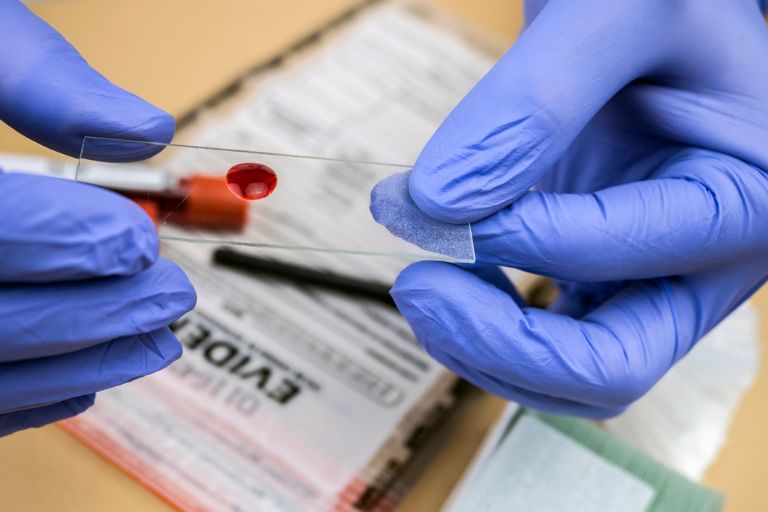
M.Sc - Forensic Science
Starting From
₹200,000 /- Per Year

About Course
A Master of Science (M.Sc) in Forensic Science is a specialized postgraduate program that equips students with advanced knowledge and practical skills in applying scientific principles to criminal investigations. This interdisciplinary field combines elements of biology, chemistry, physics, and law to analyze evidence from crime scenes and contribute to the judicial process. The curriculum typically covers a range of topics, including forensic biology, chemistry, toxicology, and forensic pathology, providing students with a comprehensive understanding of how scientific techniques can be utilized in legal contexts.
Throughout the program, students learn various forensic methodologies, such as DNA analysis, fingerprinting, ballistics, and drug analysis. They are trained in the use of sophisticated laboratory equipment and techniques to collect, preserve, and analyze evidence. Emphasis is placed on critical thinking and problem-solving skills, as students must often interpret complex data and present their findings in a clear and concise manner, especially in a courtroom setting.
In addition to core scientific courses, many programs offer specialized electives in areas like digital forensics, forensic psychology, and crime scene investigation. These courses allow students to tailor their education to specific interests within the field and gain expertise in niche areas
A Master of Science (M.Sc) in Forensic Science is a specialized postgraduate program that equips students with advanced knowledge and practical skills in applying scientific principles to criminal investigations. This interdisciplinary field combines elements of biology, chemistry, physics, and law to analyze evidence from crime scenes and contribute to the judicial process. The curriculum typically covers a range of topics, including forensic biology, chemistry, toxicology, and forensic pathology, providing students with a comprehensive understanding of how scientific techniques can be utilized in legal contexts. Throughout the program, students learn various forensic methodologies, such as DNA analysis, fingerprinting, ballistics, and drug analysis. They are trained in the use of sophisticated laboratory equipment and techniques to collect, preserve, and analyze evidence. Emphasis is placed on critical thinking and problem-solving skills, as students must interpret complex data and present their findings clearly and concisely, especially in a courtroom setting.
In addition to core scientific courses, many programs offer specialized electives in areas like digital forensics, forensic psychology, and crime scene investigation. These courses allow students to tailor their education to specific interests within the field and gain expertise in niche areas. Practical experience is a key component, often involving internships or fieldwork, where students can apply their theoretical knowledge in real-world scenarios. Graduates of an M.Sc in Forensic Science have diverse career opportunities. They may work as forensic scientists, crime scene investigators, or laboratory analysts in government agencies, law enforcement, private laboratories, or legal firms. Additionally, many graduates pursue further studies or specialized certifications to enhance their expertise and career prospects.
The demand for forensic science professionals is on the rise, driven by advancements in technology and an increasing focus on criminal justice reform. As forensic science continues to play a critical role in solving crimes and ensuring justice, this degree offers a pathway to a rewarding and impactful career, making it ideal for those passionate about science and its application in law enforcement and public safety.

Course Scope
Course Scope for M.Sc. in Forensic Science
Career Opportunities:
- Graduates can work in law enforcement agencies, forensic laboratories, and crime scene investigation units.
Specializations:
- Opportunities to specialize in areas such as forensic biology, toxicology, chemistry, digital forensics, and criminology.
Research and Development:
- Involvement in research projects aimed at improving forensic techniques and technologies.
Legal and Ethical Consulting:
- Roles in advising legal teams on forensic evidence and its implications in court.
Academia:
- Teaching positions in universities and colleges, contributing to forensic education and training.
Private Sector:
- Employment in private forensic labs, consulting firms, and security companies.
Interdisciplinary Collaboration:
- Work with professionals from law, medicine, psychology, and technology to solve complex cases.
Crime Prevention:
- Application of forensic science in crime prevention strategies and community safety programs.
Further Studies:
- Pursue a Ph.D. for advanced research opportunities or specialized roles in forensic science.
Global Opportunities:
- Scope to work internationally in various law enforcement and forensic organizations.
Graduates of M.Sc. in Forensic Science have diverse career paths available, contributing significantly to the fields of criminal justice, law, and public safety.

Course Syllabus & Subjects
Core Subjects
Forensic Biology
- Study of biological evidence, including DNA analysis, blood spatter analysis, and serology.
Forensic Chemistry
- Analysis of chemical substances, drug identification, and toxicology.
Forensic Physics
- Principles of physics applied to forensic investigations, including ballistics and accident reconstruction.
Criminalistics
- Techniques for crime scene investigation, evidence collection, and analysis.
Forensic Pathology
- Study of death investigation, autopsy procedures, and the role of the forensic pathologist.
Digital Forensics
- Recovery and analysis of data from electronic devices and networks.
Elective Subjects
Forensic Psychology
- Understanding criminal behavior and the psychological aspects of investigations.
Environmental Forensics
- Analysis of environmental contaminants and their sources.
Forensic Toxicology
- Study of toxins and their effects on biological systems.
Legal Aspects of Forensics
- Overview of laws and regulations governing forensic evidence and its admissibility in court.
Practical Components
- Laboratory Work: Hands-on experience with forensic analysis techniques.
- Fieldwork: Opportunities to engage in crime scene investigations and internships.
Questions about the M.Sc - Forensic Science?
Let our experts provide the answers – talk to us today!


Course Eligibility
The eligibility criteria for an M.Sc in Forensic Science typically include:
1. Educational Qualification
Bachelor’s Degree: Candidates must hold a bachelor's degree in forensic science, biology, chemistry, biochemistry, or a related field. Some programs may accept degrees in criminal justice or psychology, depending on the institution.
2. Minimum Marks
Most programs require a minimum percentage or GPA, often around 50-60% in the qualifying degree, though this can vary by institution.
3. Entrance Examinations
Some universities may require candidates to take an entrance exam or standardized tests (such as GRE) for admission.
4. Work Experience (Optional)
The eligibility criteria for an M.Sc in Forensic Science typically include:
1. Educational Qualification
Bachelor’s Degree: Candidates must hold a bachelor's degree in forensic science, biology, chemistry, biochemistry, or a related field. Some programs may accept degrees in criminal justice or psychology, depending on the institution.
2. Minimum Marks
Most programs require a minimum percentage or GPA, often around 50-60% in the qualifying degree, though this can vary by institution.
3. Entrance Examinations
Some universities may require candidates to take an entrance exam or standardized tests (such as GRE) for admission.
4. Work Experience (Optional)
While not always mandatory, relevant work experience in a laboratory or law enforcement setting can be beneficial and may enhance a candidate's application.
5. Additional Requirements
Some institutions may require a statement of purpose, letters of recommendation, or an interview as part of the admission process.
Conclusion
Candidates should check specific requirements for the universities they are interested in, as these can vary widely.

Course Level
- Degree Type: Master of Science (M.Sc.)
- Duration: Typically 2 years (4 semesters)
- Level: Postgraduate
- Field of Study: Forensic Science, encompassing various disciplines such as biology, chemistry, and criminology.
Confused about the course content?
Get clarity from our experts – start the conversation!
Similar Courses
Recruiters
TOP RECRUITERS:
Government Agencies:
- Central Bureau of Investigation (CBI)
- State Forensic Science Laboratories
- Crime Investigation Departments (CID)
Law Enforcement Agencies:
- Local police departments
- Federal Bureau of Investigation (FBI)
Forensic Laboratories:
- National Forensic Science Technology Center
- Private forensic labs (e.g., Forensic Analytics)
Legal Firms:
- Law firms specializing in criminal defense and prosecution.
Healthcare Institutions:
- Hospitals and medical examiners' offices for forensic pathology roles.
Academic Institutions:
- Universities and colleges offering forensic science programs and research opportunities.
Consulting Firms:
- Companies providing forensic consulting and expert witness services.
Corporate Security Departments:
- Corporations with in-house security and risk management teams.
Insurance Companies:
- Firms specializing in fraud investigation and risk assessment.
Non-Governmental Organizations (NGOs):
- Organizations focused on criminal justice reform and forensic science advocacy.
Don't let doubts hold you back.
Connect with our experts to resolve any course questions!
Popular Courses

Btech Computer Science
Starting at -/₹144,555
Btech Civil Engineering
Starting at -/₹23,000
MBA Banking Management
Starting at -/₹NaN
MA History
Starting at -/₹140,000
BA Philosophy
Starting at -/₹10,000
BS Bio Engineering
Starting at -/₹54,000Popular Colleges
![Army College of Dental Sciences - [ACDS], Secunderabad](https://dekhocampus.s3.ap-south-1.amazonaws.com/college-banner/banner_39829-20231226T125957343Z-001992.jpg)
Army College of Dental Sciences - [ACDS], Secunderabad
Apply Now![Institute of Advanced Management Research - [IAMR], Ghaziabad](https://dekhocampus.s3.ap-south-1.amazonaws.com/college-banner/banner_41311-20231226T125957343Z-001992.jpg)
Institute of Advanced Management Research - [IAMR], Ghaziabad
Apply Now![International Institute of Fashion Design - [INIFD], Pune](https://devdc.s3.eu-north-1.amazonaws.com/1720002993279_image_2024-07-03_160629635.png)
International Institute of Fashion Design - [INIFD], Pune
Apply Now![Indian Institute of Forest Management - [IIFM], Bhopal](https://devdc.s3.eu-north-1.amazonaws.com/1720081628634_image_2024-07-04_135703241.png)
Indian Institute of Forest Management - [IIFM], Bhopal
Apply Now
Banarsidas Chandiwala Institute of Hotel Management & Catering Technology, New Delhi
Apply Now![ICFAI Business School - [IBS], Kolkata](https://dekhocampus.s3.ap-south-1.amazonaws.com/college-banner/banner_89539-20231226T125957343Z-001992.jpg)
ICFAI Business School - [IBS], Kolkata
Apply NowAddress
RZ 43 Sudan Garden, Najafgarh, New Delhi - 110043Opening Hours
Monday - Saturday: 9:00 AM - 07:00 PM
Sunday: 10:00 AM - 06:00 PM