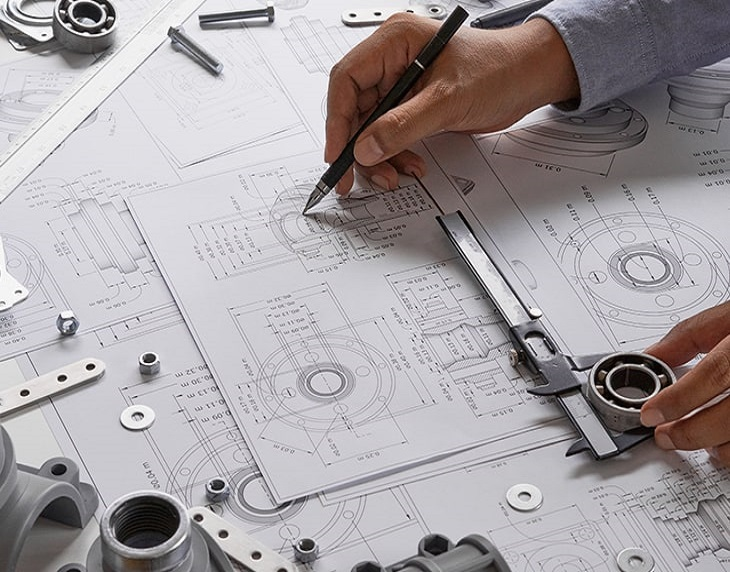
M.Des - Industrial Designing
Starting From
₹76,000 /- Per Year

About Course
M.Des - Industrial Designing is a specialized post-graduate course that focuses on developing creative solutions for the design of products, systems, and services. This course blends design thinking, technology, and sustainability to help students shape the future of industrial products in various industries, including automotive, electronics, furniture, and consumer goods. With the growing demand for aesthetically appealing yet functional products, the M.Des - Industrial Designing course equips students with the necessary skills to excel in the competitive design landscape.
To pursue an M.Des in Industrial Designing, candidates should have a bachelor's degree in design, engineering, architecture, or related fields. Admission requirements may vary across institutions, but typically, candidates need to demonstrate proficiency in design principles, problem-solving abilities, and creativity. Some institutions also conduct entrance exams or interviews to assess the candidate's skills and potential. The course typically covers a wide range of subjects, such as Product Design, Ergonomics, Sustainable Design, Materials and Manufacturing Processes, Design Research, Digital Fabrication, and Design Management. Students are also exposed to industry trends and challenges, helping them understand the role of industrial designers in real-world scenarios. Practical learning through design projects, workshops, and internships is an essential part of the course, ensuring students gain hands-on experience in product development.
After completing an M.Des in Industrial Designing, graduates can explore a wide array of career opportunities. With the growing emphasis on innovative product development and sustainability, industrial designers are in high demand. They can work in diverse sectors, including manufacturing, automotive, consumer electronics, and even startups focused on creating innovative solutions for everyday challenges. Graduates may work as product designers, industrial design consultants, or in design teams for renowned companies, contributing to the design of user-centric products that make a significant impact on people's lives. Top recruiters for M.Des - Industrial Designing include multinational corporations, design consultancies, and product-based companies, such as Tata Motors, LG Electronics, Godrej, Philips, and Bosch. Design consultancies like IDEO, Frog Design, and Continuum also offer excellent opportunities for industrial design graduates to work on cutting-edge product development projects.
In conclusion, M.Des - Industrial Designing offers a promising career in the design field, with a focus on innovation, sustainability, and user-centered design. By gaining expertise in industrial design principles and practical experience, graduates can significantly contribute to the development of future products that combine form, function, and social impact.

Course Scope
The scope of M.Des in Industrial Designing is vast, offering numerous career opportunities in various industries related to design, product development, and manufacturing. The course equips students with the skills needed to create innovative, functional, and aesthetically appealing products while considering factors like usability, sustainability, and consumer needs. Below are the key areas where graduates can explore career opportunities:
1. Product Design
Graduates of the M.Des in Industrial Designing can work as product designers in various industries, including consumer electronics, automobiles, furniture, home appliances, and sports equipment. They are responsible for designing products that are not only visually appealing but also functional and user-friendly.
2. Packaging Design
In industries like food and beverages, cosmetics, and pharmaceuticals, packaging design plays a crucial role. Industrial design graduates can work in designing innovative and sustainable packaging that enhances the product's visual appeal, protects the contents, and aligns with the brand's identity.
3. UX/UI Design
With the growing importance of user experience (UX) and user interface (UI) design, M.Des graduates can venture into the world of digital design. They can work on creating intuitive and visually appealing interfaces for websites, mobile apps, and software programs, ensuring a seamless and engaging user experience.
4. Automobile and Transportation Design
The automobile industry requires industrial designers to work on the design of vehicles, from exteriors to interiors. M.Des graduates can work as automobile designers, contributing to the development of car models, public transportation systems, and electric vehicles, ensuring functionality, comfort, and aesthetics.
5. Furniture Design
Industrial design graduates can specialize in furniture design, creating innovative and ergonomic furniture for residential, commercial, and office spaces. They can work with furniture manufacturers, interior designers, or establish their own design studio.
6. Sustainability and Eco-Design
With growing concerns about sustainability, industrial designers are now focusing on eco-friendly design solutions. Graduates can specialize in sustainable product design, eco-friendly packaging, or upcycling to meet the demand for environmentally responsible products.
7. Consulting and Freelancing
After completing the M.Des in Industrial Designing, graduates can start their own design consultancy firm or work as freelance industrial designers. As consultants, they can work with various companies on product development, branding, and design strategy, offering creative solutions tailored to their clients' needs.
8. Teaching and Research
For those interested in academia, M.Des graduates can take up roles as professors or researchers in design institutions. They can also contribute to design innovation and product research by collaborating with manufacturers and research organizations.
9. Government and Public Sector
Industrial designers with a background in M.Des can also explore opportunities in the government and public sector. They can work on projects related to infrastructure design, public transportation systems, and industrial design policies.
10. Entrepreneurship
M.Des graduates can choose the entrepreneurial route by launching their own design start-up or product-based business. With expertise in product development, branding, and manufacturing processes, they can create and market their own unique products.
In conclusion, the scope of M.Des in Industrial Designing offers a wealth of opportunities in creative, technical, and entrepreneurial roles. Graduates can contribute to designing products that are practical, functional, and aesthetically pleasing, catering to a wide range of industries from consumer goods to automobiles and digital products. The growing demand for innovative and sustainable designs ensures that industrial designers will remain in high demand across various sectors.

Course Syllabus & Subjects
Design Fundamentals: This subject focuses on the basic principles of design, such as shape, color theory, and design aesthetics, helping students build a strong foundation in design concepts.
Materials and Processes: Students learn about various materials used in industrial design, their properties, and how to work with them in the creation of products. This includes an understanding of manufacturing processes and how materials impact the design and functionality of a product.
Ergonomics and Human Factors: This subject focuses on designing products that are comfortable and safe for human use. It includes the study of human physiology, biomechanics, and cognitive factors to ensure that designs improve user experience and minimize the risk of injury.
Product Design and Prototyping: In this subject, students learn how to create, test, and refine prototypes of their designs. This involves using CAD (Computer-Aided Design) software and other tools to bring ideas to life.
Sustainable Design: As sustainability becomes more important in the design industry, this subject covers eco-friendly design principles. Students explore how to create products with minimal environmental impact, including the use of sustainable materials and energy-efficient processes.
Design Management: This subject focuses on the business aspects of design, including project management, budgeting, and marketing. Students learn how to manage design projects, work in teams, and communicate effectively with clients.
Advanced 3D Modeling and CAD: This course delves deeper into using advanced tools for 3D modeling and Computer-Aided Design, equipping students with the technical skills needed to design complex products and systems.
Innovation and Design Thinking: The focus of this subject is on developing innovative design solutions and thinking creatively to solve real-world problems. Students are taught how to apply design thinking methods to develop products that meet the needs of users and businesses.
Industrial Design History and Theory: This subject covers the history and evolution of industrial design, introducing students to key movements, influential designers, and important theoretical frameworks that shape the field.
Elective Courses: Students may have the option to choose elective courses based on their specific interests, such as smart products, automotive design, or consumer electronics design.
Questions about the M.Des - Industrial Designing?
Let our experts provide the answers – talk to us today!


Course Eligibility
Educational Qualification:
- Candidates must have completed a Bachelor’s degree (B.Des, BFA, or B.Tech/BE) in a relevant field from a recognized university or institution. Some institutions may accept graduates from any discipline, provided they have a strong interest or background in design and creativity.
- Minimum marks required: Generally, a minimum of 50% to 55% marks in the undergraduate degree is required, though this may vary across institutions.
Entrance Exam:
- Many reputed institutes offering M.Des in Industrial Designing conduct their own entrance exams to evaluate candidates based on their creative and technical abilities. Popular entrance exams include the CEED (Common Entrance Exam for Design) and institute-specific tests.
- The exam usually assesses design aptitude, drawing skills, analytical abilities, and problem-solving skills.
Age Limit:
- Some institutions may impose an upper age limit for candidates applying for the M.Des program, which typically ranges from 25 to 30 years.
Portfolio:
- Many institutes require applicants to submit a portfolio showcasing their design projects, artwork, or any relevant work to demonstrate their creativity and design skills. This is often a crucial part of the selection process.
Work Experience (Optional):
- While work experience is not always a mandatory requirement, some institutions may give preference to candidates with prior experience in design-related fields, as it adds value to the overall skillset.

Course Level
The M.Des (Master of Design) in Industrial Designing is a postgraduate-level course. It typically follows the completion of an undergraduate degree, such as B.Des (Bachelor of Design), BFA (Bachelor of Fine Arts), B.Tech/BE (Bachelor of Technology/Engineering) with a focus on design, or any other related field. This advanced program is designed for students who wish to deepen their knowledge and expertise in industrial design, equipping them with the skills necessary to create innovative and functional products for various industries.
The M.Des course typically spans 2 years, offering both theoretical learning and hands-on experience through projects, internships, and workshops. It focuses on advanced design concepts, product development, materials science, ergonomics, and sustainability. This level of education prepares students for leadership roles in design teams, consultancy firms, or as entrepreneurs in the design and manufacturing sectors.
Confused about the course content?
Get clarity from our experts – start the conversation!
Similar Courses
Recruiters
Top Recruiters:
- Tata Motors
- Mahindra & Mahindra
- Apple
- Samsung
- Sony
- LG Electronics
- Bajaj Auto
- General Electric (GE)
- Philips
- Electrolux
- Bosch
- Harman International
- Whirlpool
- Ford Motor Company
- Nike
- Adidas
- PepsiCo
- Coca-Cola
- Harman Kardon
- Hewlett Packard (HP)
Don't let doubts hold you back.
Connect with our experts to resolve any course questions!
Popular Courses

Btech Computer Science
Starting at -/₹144,555
Btech Civil Engineering
Starting at -/₹23,000
MBA Banking Management
Starting at -/₹NaN
MA History
Starting at -/₹140,000
BA Philosophy
Starting at -/₹10,000
BS Bio Engineering
Starting at -/₹54,000Popular Colleges
![Army College of Dental Sciences - [ACDS], Secunderabad](https://dekhocampus.s3.ap-south-1.amazonaws.com/college-banner/banner_39829-20231226T125957343Z-001992.jpg)
Army College of Dental Sciences - [ACDS], Secunderabad
Apply Now![Institute of Advanced Management Research - [IAMR], Ghaziabad](https://dekhocampus.s3.ap-south-1.amazonaws.com/college-banner/banner_41311-20231226T125957343Z-001992.jpg)
Institute of Advanced Management Research - [IAMR], Ghaziabad
Apply Now![International Institute of Fashion Design - [INIFD], Pune](https://devdc.s3.eu-north-1.amazonaws.com/1720002993279_image_2024-07-03_160629635.png)
International Institute of Fashion Design - [INIFD], Pune
Apply Now![Indian Institute of Forest Management - [IIFM], Bhopal](https://devdc.s3.eu-north-1.amazonaws.com/1720081628634_image_2024-07-04_135703241.png)
Indian Institute of Forest Management - [IIFM], Bhopal
Apply Now
Banarsidas Chandiwala Institute of Hotel Management & Catering Technology, New Delhi
Apply Now![ICFAI Business School - [IBS], Kolkata](https://dekhocampus.s3.ap-south-1.amazonaws.com/college-banner/banner_89539-20231226T125957343Z-001992.jpg)
ICFAI Business School - [IBS], Kolkata
Apply NowAddress
RZ 43 Sudan Garden, Najafgarh, New Delhi - 110043Opening Hours
Monday - Saturday: 9:00 AM - 07:00 PM
Sunday: 10:00 AM - 06:00 PM