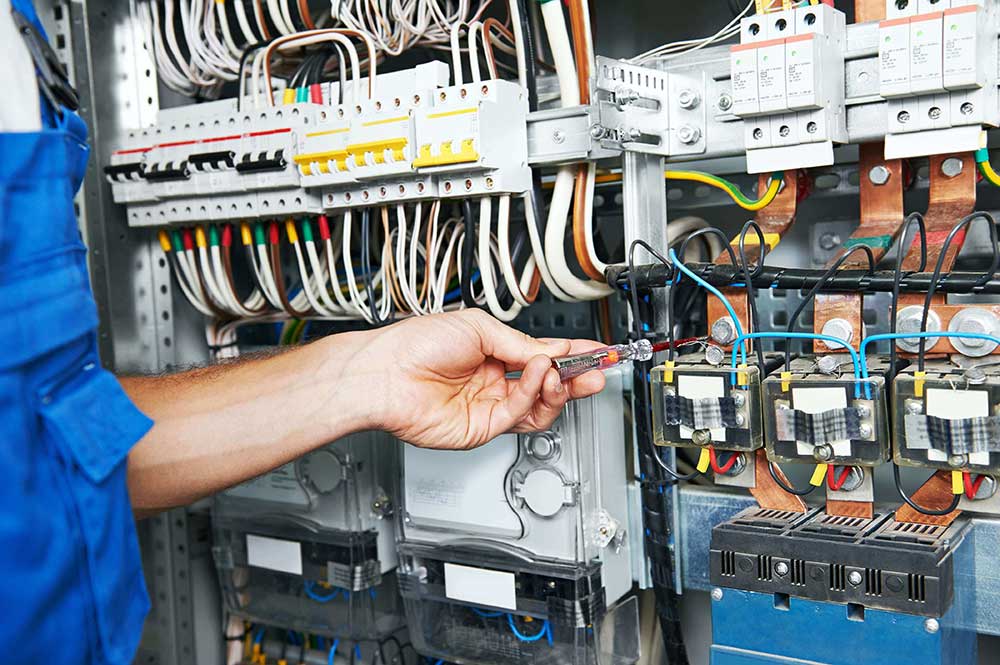
Instrumentation Engineering
Starting From
₹42,000 /- Per Year

About Course
Instrumentation Engineering is a specialized branch of engineering that focuses on the design, development, and maintenance of instruments used for measuring, monitoring, and controlling physical quantities in various industries. This discipline combines principles from electrical engineering, electronics, mechanical engineering, and computer science to create and enhance systems that improve efficiency and precision in industrial processes. Instrumentation engineers are primarily concerned with the accuracy and reliability of instruments that measure parameters such as temperature, pressure, flow, and level.
The scope of instrumentation engineering is vast, encompassing diverse sectors such as manufacturing, petrochemicals, pharmaceuticals, food processing, and power generation. With the rise of automation and smart technologies, the demand for instrumentation engineers has surged, as they play a crucial role in implementing control systems that optimize production and ensure safety. These professionals are involved in the entire lifecycle of instrumentation systems, from conceptual design to installation and commissioning, as well as ongoing maintenance and troubleshooting.
Instrumentation engineering programs typically cover subjects such as control systems, process automation, signal processing, sensors and transducers, and data acquisition systems. Students also gain hands-on experience through laboratory work, where they learn to work with various instruments and technologies used in real-world applications.
As industries continue to evolve with advancements in technology, instrumentation engineers are at the forefront of innovation. They develop sophisticated measurement and control systems that enhance productivity and minimize risks, making them invaluable in ensuring compliance with industry standards and regulations. With a strong foundation in mathematics, physics, and engineering principles, graduates of instrumentation engineering are well-equipped to tackle complex challenges in a rapidly changing technological landscape. Their expertise is essential for the advancement of automation, quality control, and process optimization across numerous industries, contributing significantly to improved operational efficiency and safety.

Course Scope
The course scope of Instrumentation Engineering is extensive and continually evolving, reflecting the growing importance of automation, precision, and data analysis in various industries. Graduates in this field are equipped with a diverse skill set that allows them to work in multiple domains. Here’s an overview of the various aspects of the course scope:
1. Industry Applications
Instrumentation engineers are crucial in several industries, including:
Manufacturing: They design and maintain instruments that monitor and control manufacturing processes to enhance efficiency and quality.
Oil and Gas: In this sector, they work on instrumentation for exploration, extraction, and refining processes, ensuring safety and compliance with environmental standards.
Pharmaceuticals: They develop and implement instruments for precise measurement and control in drug formulation, quality assurance, and regulatory compliance.
Food and Beverage: Instrumentation engineers ensure that production processes meet safety standards and quality controls through accurate measurement and monitoring systems.
Power Generation: They work in thermal, hydro, and renewable energy sectors, focusing on instrumentation for control systems and monitoring equipment.
2. Emerging Technologies
The scope of instrumentation engineering is expanding with the rise of new technologies:
Automation and Control Systems: Engineers design systems that automate processes, reduce manual intervention, and enhance operational efficiency.
Internet of Things (IoT): They develop smart instruments and sensors that connect to the internet, enabling real-time monitoring and data analysis.
Artificial Intelligence and Machine Learning: Instrumentation engineers are increasingly integrating AI and ML into control systems for predictive maintenance and enhanced data analytics.
Robotics: They work on instrumentation for robotic systems, improving precision and functionality in automated tasks.
3. Career Opportunities
Graduates can pursue various roles, such as:
Instrumentation Engineer
Control Systems Engineer
Field Engineer
Process Automation Engineer
Research and Development Engineer
Quality Control Engineer
4. Higher Education and Research
Graduates often opt for advanced studies (M.Tech/Ph.D.) in specialized areas of instrumentation, allowing them to engage in research and development or teaching roles in academia.
Conclusion
The course scope of Instrumentation Engineering is broad and multifaceted, offering graduates opportunities in diverse sectors and emerging technologies. With the increasing reliance on automation and advanced measurement systems, instrumentation engineers are essential for driving innovation, efficiency, and safety in modern industries. The ongoing advancements in technology further enhance the relevance and demand for professionals in this field, ensuring a promising career outlook.
Course Syllabus & Subjects
1. Undergraduate Level (B.E./B.Tech)
Core Subjects
Basic Electrical Engineering: Introduction to electrical principles, circuit analysis, and electrical components.
Analog Electronics: Study of analog circuits, operational amplifiers, and signal processing.
Digital Electronics: Focus on digital logic design, microcontrollers, and digital signal processing.
Control Systems: Analysis and design of control systems, including feedback and stability concepts.
Sensors and Transducers: Understanding various types of sensors, their principles, and applications in measurement.
Process Control: Study of control strategies and techniques used in industrial processes.
Instrumentation System Design: Designing instrumentation systems for specific applications, including hardware and software integration.
Signal Processing: Techniques for analyzing and manipulating signals, including filtering and data compression.
Measurement Techniques: Methods for measuring physical parameters like temperature, pressure, and flow.
Microprocessors and Microcontrollers: Introduction to microprocessors, programming, and applications in instrumentation.
Elective Subjects
Industrial Automation: Principles and technologies used in automating industrial processes.
Embedded Systems: Design and implementation of embedded systems in instrumentation applications.
Data Acquisition Systems: Techniques for collecting and processing data from various sources.
Robotics and Automation: Study of robotic systems and their applications in automation.
Quality Control and Reliability Engineering: Principles of quality assurance in instrumentation systems.
2. Postgraduate Level (M.E./M.Tech)
Advanced Subjects
Advanced Control Systems: In-depth study of control theory, advanced control strategies, and real-time systems.
Process Automation and Control: Advanced techniques for process control and automation in various industries.
Instrumentation for Process Industries: Specialized study of instrumentation used in industries like oil and gas, pharmaceuticals, and food processing.
Smart Sensors and Systems: Exploration of intelligent sensors, IoT applications, and data analysis techniques.
Robust Control and Nonlinear Systems: Advanced topics in control theory focusing on robustness and nonlinear dynamics.
Research and Project Work
Thesis/Dissertation: Conducting original research on a topic related to instrumentation engineering, often resulting in a published paper or project.
Project Work: Practical implementation of learned concepts through industrial projects or research.
Questions about the Instrumentation Engineering?
Let our experts provide the answers – talk to us today!


Course Eligibility
1. Undergraduate Level (B.E./B.Tech in Instrumentation Engineering)
Eligibility Criteria
- Educational Qualification: Candidates must have completed their higher secondary education (10+2) or its equivalent with a focus on Physics, Chemistry, and Mathematics.
- Minimum Percentage: Most institutions require a minimum percentage (usually around 50-60%) in the qualifying examination.
- Entrance Exams: Admission is often based on performance in entrance exams such as:
- JEE Main (Joint Entrance Examination)
- State-level engineering entrance exams
- University-specific entrance exams
2. Postgraduate Level (M.E./M.Tech in Instrumentation Engineering)
Eligibility Criteria
- Educational Qualification: Candidates should possess a Bachelor’s degree in Instrumentation Engineering, Electronics and Communication Engineering, Electrical Engineering, or a related field.
- Minimum Percentage: A minimum aggregate percentage (typically around 50-60%) in the undergraduate degree is required.
- Entrance Exams: Admission to postgraduate programs may be based on scores from:
- GATE (Graduate Aptitude Test in Engineering)
- University-specific entrance exams
- Interviews or group discussions conducted by the institution
3. Doctoral Level (Ph.D. in Instrumentation Engineering)
Eligibility Criteria
- Educational Qualification: Candidates must have a Master’s degree in Instrumentation Engineering or a closely related field.
- Minimum Percentage: A strong academic record, usually with a minimum of 55-60% in the Master’s program.
- Entrance Exams/Interviews: Admission may require qualifying for an entrance exam or an interview, depending on the university's requirements.

Course Level
Confused about the course content?
Get clarity from our experts – start the conversation!
Similar Courses
Recruiters
Top Recruiters:
1. Oil and Gas Companies
Shell
ExxonMobil
BP (British Petroleum)
Chevron
Halliburton
Schlumberger
2. Manufacturing and Automation Firms
Siemens
Honeywell
Rockwell Automation
General Electric
Emerson Electric
ABB Ltd.
3. Pharmaceutical and Biotechnology Companies
Pfizer
Johnson & Johnson
Roche
Novartis
GSK (GlaxoSmithKline)
4. Power Generation and Utility Companies
Tata Power
NTPC (National Thermal Power Corporation)
Indian Oil Corporation
BHEL (Bharat Heavy Electricals Limited)
Siemens Energy
5. Consumer Electronics and Technology Companies
Samsung
Sony
LG Electronics
Apple
Intel
6. Research and Development Organizations
DRDO (Defense Research and Development Organization)
ISRO (Indian Space Research Organization)
Bhabha Atomic Research Centre (BARC)
7. Telecommunications Companies
Cisco Systems
Ericsson
Nokia
Huawei
8. Aerospace and Defense Firms
Boeing
Lockheed Martin
Raytheon Technologies
Northrop Grumman
9. Startups and Emerging Tech Companies
Various startups focusing on IoT, automation, and smart technologies are increasingly hiring instrumentation engineers for innovative projects.
Conclusion
Don't let doubts hold you back.
Connect with our experts to resolve any course questions!
Popular Courses

Btech Computer Science
Starting at -/₹144,555
Btech Civil Engineering
Starting at -/₹23,000
MBA Banking Management
Starting at -/₹NaN
MA History
Starting at -/₹140,000
BA Philosophy
Starting at -/₹10,000
BS Bio Engineering
Starting at -/₹54,000Popular Colleges
![Army College of Dental Sciences - [ACDS], Secunderabad](https://dekhocampus.s3.ap-south-1.amazonaws.com/college-banner/banner_39829-20231226T125957343Z-001992.jpg)
Army College of Dental Sciences - [ACDS], Secunderabad
Apply Now![Institute of Advanced Management Research - [IAMR], Ghaziabad](https://dekhocampus.s3.ap-south-1.amazonaws.com/college-banner/banner_41311-20231226T125957343Z-001992.jpg)
Institute of Advanced Management Research - [IAMR], Ghaziabad
Apply Now![International Institute of Fashion Design - [INIFD], Pune](https://devdc.s3.eu-north-1.amazonaws.com/1720002993279_image_2024-07-03_160629635.png)
International Institute of Fashion Design - [INIFD], Pune
Apply Now![Indian Institute of Forest Management - [IIFM], Bhopal](https://devdc.s3.eu-north-1.amazonaws.com/1720081628634_image_2024-07-04_135703241.png)
Indian Institute of Forest Management - [IIFM], Bhopal
Apply Now
Banarsidas Chandiwala Institute of Hotel Management & Catering Technology, New Delhi
Apply Now![ICFAI Business School - [IBS], Kolkata](https://dekhocampus.s3.ap-south-1.amazonaws.com/college-banner/banner_89539-20231226T125957343Z-001992.jpg)
ICFAI Business School - [IBS], Kolkata
Apply NowAddress
RZ 43 Sudan Garden, Najafgarh, New Delhi - 110043Opening Hours
Monday - Saturday: 9:00 AM - 07:00 PM
Sunday: 10:00 AM - 06:00 PM