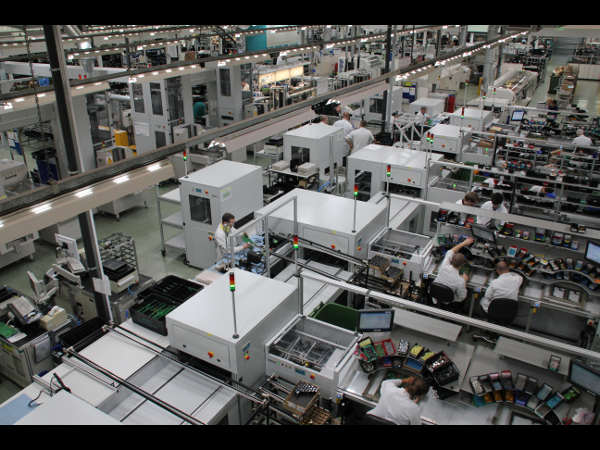
Industrial and Production Engineering
Starting From
₹76,000 /- Per Year

About Course
Industrial and Production Engineering is a branch of engineering that focuses on optimizing complex processes, systems, and organizations to improve productivity, efficiency, and quality. It integrates principles of engineering, management, and economics to design and manage production systems, ensuring that products are manufactured efficiently, safely, and sustainably. Industrial and Production Engineers work across various sectors, including manufacturing, supply chain management, logistics, and quality control, playing a crucial role in enhancing the operations of industries such as automotive, electronics, textiles, and consumer goods.
The core of Industrial and Production Engineering lies in the analysis and optimization of production systems. Engineers in this field are tasked with improving processes related to the production of goods and services, minimizing waste, reducing costs, and increasing output. They apply methods like lean manufacturing, Six Sigma, and Total Quality Management (TQM) to streamline operations, reduce inefficiencies, and enhance product quality. By analyzing workflow, materials handling, and machinery operations, Industrial Engineers can design systems that increase throughput while maintaining high standards of quality and safety.
One key area of focus is supply chain management, where engineers work to ensure the smooth flow of materials, information, and products from suppliers to customers. They design logistics networks, optimize inventory management, and forecast demand to prevent shortages and delays. Production engineers also work on production planning and scheduling to ensure that manufacturing processes are well-coordinated and that resources are utilized efficiently.
Another critical aspect is ergonomics and the design of work environments. Industrial engineers ensure that workstations and equipment are designed to improve worker safety, comfort, and productivity. This includes studying human factors and designing tools, machines, and workspaces that prevent injury and reduce fatigue, thereby improving overall productivity and worker satisfaction.
In the age of Industry 4.0, Industrial and Production Engineers also embrace automation, robotics, and data analytics. They integrate advanced technologies into manufacturing systems to improve precision, speed, and scalability. These engineers use computer-aided design (CAD) and computer-aided manufacturing (CAM) tools to optimize production processes and make data-driven decisions.
In conclusion, Industrial and Production Engineering offers a multidisciplinary approach to improving manufacturing processes and systems. Professionals in this field are essential for driving operational efficiency, cost reduction, and quality improvement in various industries. With the growing focus on automation, sustainability, and global supply chains, the demand for skilled Industrial and Production Engineers continues to rise, making this field both dynamic and rewarding.

Course Scope
Scope of Industrial and Production Engineering
Industrial and Production Engineering offers a wide range of career opportunities, both in terms of job roles and industries. This multidisciplinary field blends engineering, management, and optimization strategies to enhance manufacturing processes, production systems, and organizational efficiency. The scope of this field continues to expand due to the increasing focus on automation, sustainability, and the optimization of complex systems. Below is a detailed look at the various aspects of the course scope:
1. Career Opportunities
Graduates in Industrial and Production Engineering can pursue diverse roles across various sectors. Some of the top career opportunities include:
- Production Engineer: Overseeing the manufacturing process, ensuring smooth production flow, and implementing process improvements.
- Industrial Engineer: Focusing on improving operational efficiency by optimizing systems, resources, and workflows.
- Supply Chain Manager: Managing and optimizing the flow of goods and services, including procurement, logistics, and inventory control.
- Quality Control Engineer: Ensuring product quality by monitoring production processes, conducting tests, and implementing quality standards.
- Operations Manager: Overseeing production lines, resource management, and ensuring that operations meet company goals for productivity and cost-efficiency.
- Logistics Engineer: Designing efficient transportation systems and storage solutions for materials and products.
- Manufacturing Consultant: Advising companies on the best practices for improving manufacturing processes and reducing costs.
2. Industry Demand
Industrial and Production Engineering is relevant to a wide range of industries, such as:
- Manufacturing and Automotive: Companies like Tata Motors, Mahindra & Mahindra, and Bajaj Auto hire engineers to improve production efficiency and develop innovative manufacturing systems.
- Consumer Goods: Major companies like Unilever, Procter & Gamble, and Nestlé require engineers for process optimization, packaging, and supply chain management.
- Electronics and Technology: Firms like Samsung, Intel, and Apple need engineers to work on production systems and ensure the efficient mass production of electronic devices.
- Energy and Power: Companies like NTPC and BHEL require expertise in optimizing energy production processes, manufacturing, and distribution.
- Consulting Firms: Leading consulting companies like McKinsey, Bain & Company, and Deloitte hire industrial engineers for management consulting projects focused on process improvement, cost reduction, and operational excellence.
3. Research and Innovation
The scope also extends to research, especially with the rise of Industry 4.0. Topics of research include:
- Automation and Robotics: Exploring new technologies to automate manufacturing processes and improve precision and speed.
- Sustainability: Developing eco-friendly production techniques, reducing energy consumption, and promoting circular manufacturing systems.
- Big Data and Analytics: Leveraging data analytics to monitor production in real time, predict maintenance needs, and optimize supply chains.
- Lean Manufacturing: Researching new methods to minimize waste, improve efficiency, and enhance product quality.
4. Global Opportunities
With increasing globalization, the demand for skilled Industrial and Production Engineers has expanded beyond national borders. Opportunities in emerging markets like China, Brazil, and India, as well as in developed economies like Germany, USA, and Japan, are growing. Multinational companies across the globe seek professionals who can optimize supply chains, manage large-scale manufacturing operations, and implement technological innovations.
5. Continuous Growth and Advancements
As industries continue to evolve, the scope of Industrial and Production Engineering keeps expanding, particularly with the integration of artificial intelligence (AI), machine learning (ML), and IoT (Internet of Things) in manufacturing. This means that Industrial Engineers will continue to play a central role in the future of manufacturing, logistics, and service industries.
Conclusion
The scope of Industrial and Production Engineering is broad, offering rewarding career prospects across various industries. With a focus on process optimization, innovation, and sustainability, professionals in this field are critical to improving the efficiency of manufacturing operations, reducing costs, and enhancing product quality. The continuous growth of automation, data analytics, and global supply chains ensures that Industrial and Production Engineering remains a dynamic and valuable field for the future.

Course Syllabus & Subjects
1. Core Subjects
- Engineering Mathematics: Fundamental mathematical concepts and methods used in various engineering applications, including calculus, linear algebra, and differential equations.
- Manufacturing Processes: Study of various manufacturing methods such as casting, forging, welding, machining, and additive manufacturing (3D printing).
- Mechanics of Materials: Analyzing the behavior of materials under different types of loading, including stress, strain, and deformation.
- Fluid Mechanics: Study of the behavior of fluids (liquids and gases) and their applications in industrial systems.
- Thermodynamics: Basic principles of heat, work, and energy transfer, applied to industrial systems and manufacturing processes.
- Material Science: Understanding the properties of materials, including metals, polymers, and ceramics, and how these affect manufacturing and product design.
2. Production and Operations Management
- Operations Research: Techniques for optimizing production systems, such as linear programming, queuing theory, and decision analysis.
- Production Planning and Control: Techniques for planning and scheduling production processes, managing inventories, and ensuring the efficient use of resources.
- Supply Chain Management: Managing the flow of materials, information, and products from suppliers to customers, focusing on inventory management, procurement, and logistics.
- Industrial Automation: Introduction to automated production systems, robotics, and the integration of technology to improve production efficiency.
- Work Study and Ergonomics: Analyzing human work behavior and designing work environments that enhance productivity and reduce physical strain.
3. Quality Control and Improvement
- Quality Control and Assurance: Study of methods and tools used to monitor and maintain product quality, including statistical process control (SPC), sampling techniques, and quality audits.
- Total Quality Management (TQM): Principles and practices focused on improving quality across all aspects of an organization, with a strong emphasis on continuous improvement.
- Six Sigma: A set of techniques and tools for process improvement aimed at reducing defects and improving quality.
- Reliability Engineering: Ensuring the longevity and reliability of products and systems by analyzing failure modes and implementing preventive maintenance strategies.
4. Advanced Topics
- Lean Manufacturing: Study of methodologies aimed at minimizing waste while maximizing productivity, focusing on concepts like just-in-time (JIT) production and 5S workplace organization.
- Computer-Aided Design (CAD): Software tools for designing and simulating products and production systems, facilitating digital modeling and prototyping.
- Computer-Aided Manufacturing (CAM): Software used for controlling machinery in the manufacturing process, integrating design with production.
- Industrial Safety and Risk Management: Techniques for identifying hazards, preventing accidents, and managing risk in industrial environments.
- Sustainable Manufacturing: Focus on environmentally friendly practices, energy conservation, and reducing waste in production systems.
5. Practical Components
- Industrial Training: Hands-on experience through internships or industrial visits, allowing students to apply their knowledge to real-world manufacturing environments.
- Project Work: Collaborative or individual projects focusing on the design, optimization, and improvement of industrial systems or processes.
- Simulation and Modeling: Using software tools to model manufacturing systems and simulate different production scenarios for analysis and optimization.
Questions about the Industrial and Production Engineering?
Let our experts provide the answers – talk to us today!


Course Eligibility
Eligibility for Industrial and Production Engineering Courses
The eligibility criteria for Industrial and Production Engineering courses vary depending on the level of study (undergraduate, postgraduate, or doctoral) and the specific institution. Below is an overview of the typical eligibility requirements for each course level:
1. Undergraduate Level (B.Tech/B.E. in Industrial and Production Engineering)
- Educational Qualification:
- Candidates must have completed 10+2 (or equivalent) with a strong background in Mathematics, Physics, and Chemistry.
- A high school diploma in science (with subjects like math, physics, and chemistry) is mandatory for admission into undergraduate programs.
- Minimum Marks:
- Generally, a minimum aggregate score of 50% - 60% in 10+2 exams, although this can vary by institution.
- Entrance Exams:
- Admission to undergraduate programs often requires qualifying in national-level entrance exams such as JEE Main, JEE Advanced, or state-level entrance exams (e.g., MHT-CET, UPSEE, WBJEE).
- Some universities and private institutions may have their own entrance exams or merit-based admissions.
2. Postgraduate Level (M.Tech/M.S. in Industrial and Production Engineering)
- Educational Qualification:
- Candidates must have a Bachelor's degree in Industrial Engineering, Mechanical Engineering, Production Engineering, or any other related field of engineering from a recognized institution.
- Minimum Marks:
- A minimum aggregate score of 50% - 60% in the undergraduate program is generally required, though some institutions may set higher criteria.
- Entrance Exams:
- Admission is typically based on GATE (Graduate Aptitude Test in Engineering) for M.Tech programs in India.
- Some universities also conduct their own entrance exams or interviews.
- International students may need to provide scores from exams like GRE or meet specific entry requirements set by the institution.
3. Doctoral Level (Ph.D. in Industrial and Production Engineering)
- Educational Qualification:
- Candidates must hold a Master's degree in Industrial and Production Engineering or a related field from a recognized institution.
- In some cases, exceptional candidates with a B.Tech/B.E. may also be considered for direct Ph.D. admission, based on academic performance and research potential.
- Minimum Marks:
- Candidates should typically have a high academic standing in their master's degree (generally 60% or above).
- Entrance Exams:
- Admission to Ph.D. programs often involves institution-specific entrance exams followed by an interview or research proposal evaluation.
- In India, GATE, UGC-NET, or CSIR-NET may also be required for some institutions.
4. Diploma and Certification Level
- Course Name: Diploma or Certification in Industrial Engineering
- Duration: Typically 1 to 2 years
- Eligibility:
- A high school diploma or equivalent (for diploma courses).
- For certification courses, a Bachelor's degree in engineering or related fields may be required.
- Focus:
- These programs focus on specific skills in industrial operations, production optimization, and supply chain management.

Course Level
1. Undergraduate Level (B.Tech / B.E. in Industrial and Production Engineering)
- Duration: Typically 4 years
- Eligibility: Candidates must have completed their 10+2 education with a background in Physics, Chemistry, and Mathematics.
- Focus: The undergraduate program lays the foundation for understanding industrial engineering principles, production processes, material science, quality control, and operations management. Students also learn about automation, supply chain management, and industrial safety.
- Career Prospects: Graduates at this level typically find entry-level roles in industries such as manufacturing, logistics, quality control, and production planning.
2. Postgraduate Level (M.Tech / M.S. in Industrial and Production Engineering)
- Duration: Typically 2 years
- Eligibility: Candidates must have a Bachelor’s degree in Industrial Engineering, Mechanical Engineering, or a related field. Admission is often based on the score in GATE (Graduate Aptitude Test in Engineering) or other institution-specific entrance exams.
- Focus: This program delves deeper into advanced topics such as lean manufacturing, supply chain optimization, quality assurance, automation, and industrial systems design. Students may also specialize in areas like manufacturing management, reliability engineering, or sustainable production.
- Career Prospects: Graduates can take on roles such as Operations Manager, Supply Chain Consultant, Production Planner, or Quality Control Manager in various industries, including automotive, consumer goods, and technology.
3. Doctoral Level (Ph.D. in Industrial and Production Engineering)
- Duration: Typically 3-5 years
- Eligibility: Candidates must have a Master’s degree in Industrial and Production Engineering or a related field. A strong academic background and a demonstrated research interest are essential. Admission often requires clearing institution-specific entrance exams and an interview.
- Focus: The Ph.D. program focuses on research in specific areas such as production system optimization, automation technologies, data analytics in manufacturing, and sustainable industrial practices. Ph.D. students work on high-level projects aimed at solving complex industrial problems or developing innovative technologies.
- Career Prospects: Ph.D. holders typically pursue careers in academia as professors or researchers or work as consultants in leading research and development teams at multinational corporations or governmental organizations.
4. Diploma and Certification Courses
- Duration: Typically 1-2 years
- Eligibility: Candidates with a high school diploma or undergraduate degree in a related field (for advanced certifications).
- Focus: These programs provide specialized knowledge in areas like lean manufacturing, Six Sigma, supply chain management, and production planning. They are designed for those who wish to gain practical expertise quickly and are often suited for professionals looking to enhance their skill set.
- Career Prospects: Suitable for individuals looking to advance in their careers or switch to industrial engineering from a different field. Graduates may pursue roles in operations management, supply chain analysis, or quality control.
Confused about the course content?
Get clarity from our experts – start the conversation!
Similar Courses
Recruiters
Top Recruiters:
1. Manufacturing and Automotive Industry
- Tata Motors: A leading automobile manufacturer, Tata Motors hires Industrial Engineers to optimize production lines, reduce costs, and enhance manufacturing efficiency.
- Mahindra & Mahindra: As a major player in the automotive and tractor manufacturing industry, Mahindra & Mahindra recruits engineers for production planning, supply chain management, and process improvement.
- Maruti Suzuki: India's largest car manufacturer, Maruti Suzuki, employs Industrial Engineers for quality control, process optimization, and automation in their manufacturing plants.
- Bajaj Auto: Known for its vehicles, Bajaj Auto looks for engineers to optimize its production systems, implement lean manufacturing practices, and improve supply chain efficiency.
2. Consumer Goods and FMCG
- Unilever: A global consumer goods company that hires Industrial Engineers to streamline production processes, optimize inventory, and enhance supply chain management.
- Procter & Gamble (P&G): P&G recruits engineers for roles in manufacturing optimization, quality assurance, and supply chain management in their extensive product manufacturing facilities.
- Nestlé: As one of the largest food and beverage companies, Nestlé looks for engineers to work on production system improvement, quality control, and cost reduction strategies.
- Coca-Cola: Coca-Cola values engineers for roles in supply chain optimization, production planning, and improving manufacturing efficiency.
3. Electronics and Technology
- Samsung: A leader in electronics, Samsung recruits Industrial Engineers to design and optimize production systems for their electronic devices, with a focus on automation and quality control.
- Intel: Specializing in semiconductor manufacturing, Intel hires engineers for roles in production optimization, quality management, and process engineering.
- Apple: Apple employs Industrial Engineers to oversee the production and assembly of high-tech devices, focusing on automation, efficiency, and sustainability.
4. Energy and Power
- NTPC (National Thermal Power Corporation): India’s largest energy conglomerate, NTPC, hires engineers for roles in power plant operations, production efficiency, and energy management.
- BHEL (Bharat Heavy Electricals Limited): A leader in power generation equipment, BHEL recruits Industrial Engineers for optimizing production processes and improving system reliability in manufacturing plants.
- ExxonMobil: A multinational oil and gas company, ExxonMobil recruits engineers for roles related to process optimization, production planning, and supply chain management in their manufacturing facilities.
5. Consulting Firms
- McKinsey & Company: McKinsey often hires Industrial Engineers for management consulting roles, helping companies improve operational efficiency, reduce costs, and optimize production processes.
- Boston Consulting Group (BCG): BCG recruits engineers to work on consulting projects related to operations management, process improvement, and supply chain optimization.
- Deloitte: As a global consulting firm, Deloitte hires Industrial Engineers for roles in operations, supply chain management, and business optimization strategies.
6. E-Commerce and Retail
- Amazon: A global leader in e-commerce, Amazon employs Industrial Engineers to streamline their supply chain, optimize warehouse operations, and improve fulfillment processes.
- Flipkart: Flipkart, one of India’s largest online retailers, hires engineers for logistics, warehouse management, and supply chain optimization.
- Walmart: Known for its vast retail operations, Walmart recruits Industrial Engineers for roles in inventory management, supply chain design, and process improvement in their retail and logistics divisions.
7. Aerospace and Defense
- Boeing: A global aerospace company, Boeing hires Industrial Engineers to optimize production processes for aircraft assembly and supply chain management.
- Lockheed Martin: In the aerospace and defense sector, Lockheed Martin recruits engineers for production optimization, logistics, and supply chain management in their manufacturing plants.
8. Research and Development Firms
- Siemens: Siemens recruits Industrial Engineers for roles in research, design, and optimization of manufacturing processes, particularly in automation and digitalization.
- GE (General Electric): GE hires engineers for R&D roles focused on improving manufacturing processes, optimizing production efficiency, and designing new technologies in various sectors including energy, healthcare, and aviation.
Don't let doubts hold you back.
Connect with our experts to resolve any course questions!
Popular Courses

Btech Computer Science
Starting at -/₹144,555
Btech Civil Engineering
Starting at -/₹23,000
MBA Banking Management
Starting at -/₹NaN
MA History
Starting at -/₹140,000
BA Philosophy
Starting at -/₹10,000
BS Bio Engineering
Starting at -/₹54,000Popular Colleges
![Army College of Dental Sciences - [ACDS], Secunderabad](https://dekhocampus.s3.ap-south-1.amazonaws.com/college-banner/banner_39829-20231226T125957343Z-001992.jpg)
Army College of Dental Sciences - [ACDS], Secunderabad
Apply Now![Institute of Advanced Management Research - [IAMR], Ghaziabad](https://dekhocampus.s3.ap-south-1.amazonaws.com/college-banner/banner_41311-20231226T125957343Z-001992.jpg)
Institute of Advanced Management Research - [IAMR], Ghaziabad
Apply Now![International Institute of Fashion Design - [INIFD], Pune](https://devdc.s3.eu-north-1.amazonaws.com/1720002993279_image_2024-07-03_160629635.png)
International Institute of Fashion Design - [INIFD], Pune
Apply Now![Indian Institute of Forest Management - [IIFM], Bhopal](https://devdc.s3.eu-north-1.amazonaws.com/1720081628634_image_2024-07-04_135703241.png)
Indian Institute of Forest Management - [IIFM], Bhopal
Apply Now
Banarsidas Chandiwala Institute of Hotel Management & Catering Technology, New Delhi
Apply Now![ICFAI Business School - [IBS], Kolkata](https://dekhocampus.s3.ap-south-1.amazonaws.com/college-banner/banner_89539-20231226T125957343Z-001992.jpg)
ICFAI Business School - [IBS], Kolkata
Apply NowAddress
RZ 43 Sudan Garden, Najafgarh, New Delhi - 110043Opening Hours
Monday - Saturday: 9:00 AM - 07:00 PM
Sunday: 10:00 AM - 06:00 PM