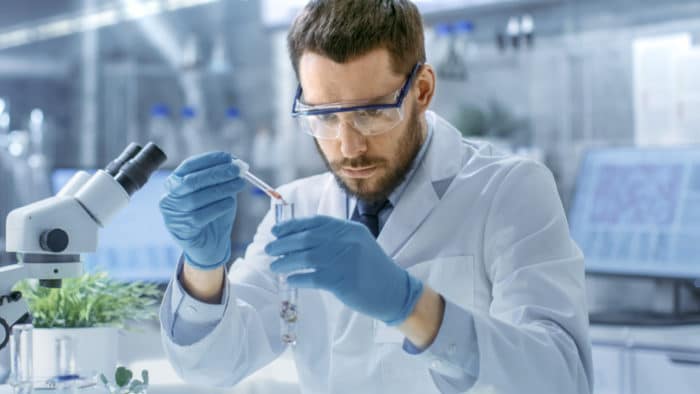
B.Sc - Biological Sciences
Starting From
₹0 /- Per Year

About Course
A Bachelor of Science (B.Sc) in Biological Sciences is an undergraduate program that provides a comprehensive education in the study of living organisms and life processes. This field encompasses various disciplines, including botany, zoology, microbiology, genetics, and ecology. The curriculum is designed to offer a broad understanding of the biological sciences, blending theoretical knowledge with practical laboratory skills. The program typically spans three to four years, depending on the educational institution and country. During this time, students explore the fundamental principles of biology, starting with core subjects such as cell biology, molecular biology, biochemistry, and physiology. These foundational courses are crucial for understanding the complex mechanisms that govern life at the molecular, cellular, and organismal levels.
As students progress through the program, they have the opportunity to delve deeper into specialized areas. For instance, courses in genetics and genomics focus on the study of heredity and genetic variation, while ecology and environmental biology examine the interactions between organisms and their environments. Additionally, microbiology covers the study of microorganisms and their roles in health, disease, and the environment. These advanced topics allow students to tailor their education to their interests and career goals. One of the key aspects of a B.Sc in Biological Sciences is the emphasis on practical experience. Laboratory work is an integral part of the curriculum, providing students with hands-on experience in conducting experiments, using scientific instruments, and applying research techniques. This practical training is essential for developing the skills needed for scientific inquiry and problem-solving. Many programs also offer fieldwork opportunities, enabling students to study organisms in their natural habitats and gain insights into ecological and environmental processes.
Graduates of a B.Sc in Biological Sciences have a wide range of career opportunities available to them. They can work in various sectors, including healthcare, biotechnology, environmental conservation, agriculture, and education. Common roles include research scientists, laboratory technicians, environmental consultants, and educators. Additionally, the program provides a strong foundation for further studies, such as pursuing a Master's or Ph.D. in biological sciences or related fields like medicine, veterinary science, or public health.
The demand for professionals with a background in biological sciences is growing, driven by advances in biotechnology, environmental challenges, and the need for healthcare innovations. A B.Sc in Biological Sciences not only equips students with a solid understanding of the natural world but also prepares them to contribute to scientific discoveries and address global challenges. This degree offers a fulfilling educational experience and opens the door to diverse and rewarding career paths.
Course Scope
The scope of a B.Sc in Biological Sciences is extensive and offers a wide array of career opportunities across various fields. Here are some key areas where graduates can find potential roles:
1. Healthcare and Medicine
Medical Research: Conducting research to understand diseases, develop treatments, and improve healthcare.
Clinical Laboratories: Working as laboratory technicians, performing diagnostic tests and analyzing medical samples.
Pharmaceutical Industry: Involvement in drug development, quality control, and clinical trials.
2. Biotechnology and Pharmaceuticals
Biotechnologist: Developing products and technologies using biological systems and organisms.
Quality Control Analyst: Ensuring the quality and safety of biotechnological products.
Regulatory Affairs Specialist: Managing compliance with regulatory requirements for new products.
3. Environmental Conservation and Ecology
Environmental Consultant: Advising on environmental management and conservation practices.
Ecologist: Studying ecosystems and biodiversity, contributing to conservation efforts.
Wildlife Biologist: Researching and protecting wildlife and natural habitats.
4. Agriculture and Food Industry
Agricultural Scientist: Improving crop yields and sustainability through research and development.
Food Technologist: Ensuring the safety, quality, and nutritional value of food products.
Plant Breeder/Geneticist: Developing new plant varieties with desired traits.
5. Education and Public Outreach
Teaching: Educating students in schools, colleges, or universities.
Science Communication: Working as a science communicator or journalist to disseminate scientific knowledge to the public.
6. Research and Development
Academic Research: Pursuing further studies (M.Sc or Ph.D.) and engaging in research at universities or research institutions.
Industry Research: Working in research and development departments of companies focusing on innovations in biotechnology, pharmaceuticals, and agriculture.
7. Forensic Science
Forensic Biologist: Analyzing biological evidence in criminal investigations.
DNA Analyst: Conducting DNA profiling for identification and forensic purposes.
8. Bioinformatics
Bioinformatics Specialist: Analyzing biological data using computational tools and methods, contributing to fields like genomics and proteomics.
Skills Development
The program emphasizes critical thinking, problem-solving, laboratory skills, and data analysis, making graduates versatile and adaptable in various roles.
Conclusion
The demand for professionals with expertise in biological sciences is growing, driven by advancements in biotechnology, environmental challenges, and healthcare needs. A B.Sc in Biological Sciences provides a strong foundation for a dynamic and fulfilling career in research, industry, healthcare, and beyond, making it a valuable and versatile degree in today’s scientific landscape.

Course Syllabus & Subjects
Course Subjects for B.Sc. in Biological Sciences
Introduction to Biology:
Overview of biological principles and concepts.
Cell Biology:
Structure and function of cells, cell division, cell signaling.
Genetics:
Principles of heredity, gene structure, function, and regulation.
Microbiology:
Study of microorganisms, their roles in ecosystems, and their applications.
Biochemistry:
Chemical processes within and related to living organisms.
Molecular Biology:
Structure and function of molecules essential for life, including DNA, RNA, and proteins.
Ecology:
Interactions between organisms and their environments.
Evolutionary Biology:
Evolutionary processes, natural selection, and speciation.
Anatomy and Physiology:
Structure and function of the human body and other organisms.
Botany:
Study of plant biology, including physiology, structure, genetics, ecology, and classification.
Zoology:
Study of animal biology, including anatomy, physiology, development, and classification.
Developmental Biology:
Processes of growth and development in living organisms.
Immunology:
Study of the immune system, immune responses, and immunological techniques.
Biostatistics:
Application of statistical methods to biological research.
Biotechnology:
Techniques and applications of using living systems and organisms to develop products.
Bioinformatics:
Use of computational tools to analyze biological data.
Environmental Biology:
Study of the environment, ecosystems, biodiversity, and conservation.
Physiology:
Functioning of organisms and their parts, covering aspects like respiration, circulation, and excretion.
Genomics and Proteomics:
Study of the complete set of genes (genomics) and proteins (proteomics) in organisms.
Laboratory Techniques and Practices:
Hands-on training in various laboratory methods and techniques.
These subjects provide a comprehensive understanding of biological sciences, preparing students for careers in research, healthcare, environmental management, and biotechnology.
Questions about the B.Sc - Biological Sciences?
Let our experts provide the answers – talk to us today!


Course Eligibility
Course Eligibility for B.Sc. in Biological Sciences
Educational Qualification:
Candidates must have completed their 10+2 education (or equivalent) from a recognized board.
The core subjects in 10+2 should typically include Biology, Chemistry, and Physics.
Minimum Marks:
A minimum aggregate percentage (usually around 50% to 60%) in the qualifying examination is often required, depending on the institution.
Some prestigious institutions may require higher percentages for admission.
Entrance Exams:
Some universities may conduct entrance examinations specific to biological sciences or general science programs.
Performance in national-level exams (such as NEET, although typically for medical courses) or state-level exams might be considered.
Age Limit:
There may be an age limit for admission, typically not exceeding 21 years for undergraduate courses, though this can vary by institution.
Additional Requirements:
Some programs might have specific prerequisites or preferences, such as previous coursework or a strong foundation in scientific subjects.
Important Notes:
Eligibility criteria can vary significantly between institutions, so it’s essential to check the specific requirements of the universities or colleges of interest.
Prospective students should also review the admission process, including any additional documentation or interviews that may be required.

Course Level
Course Level for B.Sc. Biological Sciences
- Degree Type: Bachelor of Science (B.Sc.)
- Duration: Typically 3 years (6 semesters)
- Level: Undergraduate
- Field of Study: Biological Sciences, encompassing various disciplines within the life sciences such as genetics, microbiology, biochemistry, botany, zoology, and ecology.
This undergraduate course provides foundational knowledge and practical skills in biological sciences, preparing students for various career paths in research, healthcare, environmental science, and biotechnology, as well as for further studies at the postgraduate level
Confused about the course content?
Get clarity from our experts – start the conversation!
Similar Courses
Recruiters
TOP RECRUITERS:
1. Pharmaceutical and Biotechnology Companies
Pfizer
GlaxoSmithKline (GSK)
Novartis
Johnson & Johnson
Roche
Amgen
Biocon
2. Healthcare Organizations and Clinical Laboratories
Hospitals (both public and private)
Diagnostic Labs (e.g., Quest Diagnostics, LabCorp)
Clinical Research Organizations (CROs)
3. Research Institutions and Universities
National Institutes of Health (NIH)
Centers for Disease Control and Prevention (CDC)
Max Planck Institutes
Howard Hughes Medical Institute
University research labs and departments
4. Environmental and Conservation Organizations
World Wildlife Fund (WWF)
The Nature Conservancy
Greenpeace
Environmental Protection Agencies (EPA)
Wildlife Conservation Society (WCS)
5. Agricultural and Food Industry
Monsanto
Syngenta
DuPont Pioneer
Cargill
Nestlé
Unilever
6. Government Agencies
Environmental Protection Agency (EPA)
Food and Drug Administration (FDA)
United States Department of Agriculture (USDA)
National Aeronautics and Space Administration (NASA) (for astrobiology and related research)
7. Forensic Science Laboratories
Federal Bureau of Investigation (FBI)
State and local crime labs
Private forensic labs
8. Consulting Firms
Environmental consulting firms (e.g., AECOM, Golder Associates)
Biotechnology and pharmaceutical consulting firms (e.g., IQVIA, Syneos Health)
9. Non-Governmental Organizations (NGOs)
Conservation International
Friends of the Earth
Earthwatch Institute
Skills Development
Graduates gain skills in laboratory techniques, data analysis, research methodologies, and critical thinking, making them suitable for diverse roles in these organizations.
Don't let doubts hold you back.
Connect with our experts to resolve any course questions!
Popular Courses

Btech Computer Science
Starting at -/₹144,555
Btech Civil Engineering
Starting at -/₹23,000
MBA Banking Management
Starting at -/₹NaN
MA History
Starting at -/₹140,000
BA Philosophy
Starting at -/₹10,000
BS Bio Engineering
Starting at -/₹54,000Popular Colleges
![Army College of Dental Sciences - [ACDS], Secunderabad](https://dekhocampus.s3.ap-south-1.amazonaws.com/college-banner/banner_39829-20231226T125957343Z-001992.jpg)
Army College of Dental Sciences - [ACDS], Secunderabad
Apply Now![Institute of Advanced Management Research - [IAMR], Ghaziabad](https://dekhocampus.s3.ap-south-1.amazonaws.com/college-banner/banner_41311-20231226T125957343Z-001992.jpg)
Institute of Advanced Management Research - [IAMR], Ghaziabad
Apply Now![International Institute of Fashion Design - [INIFD], Pune](https://devdc.s3.eu-north-1.amazonaws.com/1720002993279_image_2024-07-03_160629635.png)
International Institute of Fashion Design - [INIFD], Pune
Apply Now![Indian Institute of Forest Management - [IIFM], Bhopal](https://devdc.s3.eu-north-1.amazonaws.com/1720081628634_image_2024-07-04_135703241.png)
Indian Institute of Forest Management - [IIFM], Bhopal
Apply Now
Banarsidas Chandiwala Institute of Hotel Management & Catering Technology, New Delhi
Apply Now![ICFAI Business School - [IBS], Kolkata](https://dekhocampus.s3.ap-south-1.amazonaws.com/college-banner/banner_89539-20231226T125957343Z-001992.jpg)
ICFAI Business School - [IBS], Kolkata
Apply NowAddress
RZ 43 Sudan Garden, Najafgarh, New Delhi - 110043Opening Hours
Monday - Saturday: 9:00 AM - 07:00 PM
Sunday: 10:00 AM - 06:00 PM