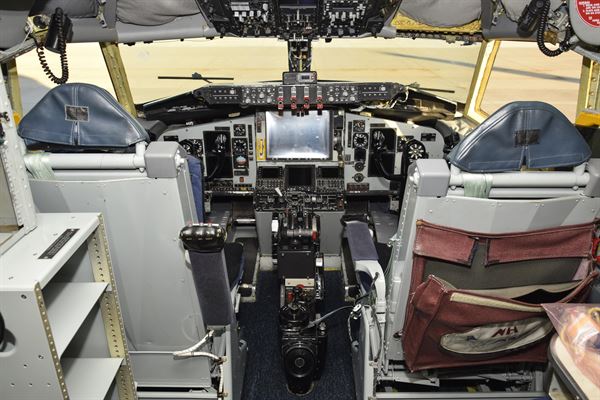
Avionics Engineering
Starting From
₹65,000 /- Per Year

About Course
Avionics Engineering is a specialized branch of aerospace engineering that focuses on the development, design, and maintenance of electronic systems used in aircraft, spacecraft, and other aviation vehicles. The term "avionics" is a combination of the words aviation and electronics, and it encompasses a wide range of technologies that are critical for navigation, communication, and monitoring the performance of aviation systems. Avionics engineers play a key role in ensuring the safety, efficiency, and functionality of modern aircraft, which rely heavily on advanced electronic systems for flight operations.
Avionics systems include several components, such as radar, navigation systems, communications equipment, flight control systems, and weather radar. These systems allow aircraft to fly safely and efficiently, helping pilots navigate, communicate with air traffic control, and monitor the aircraft's performance. One of the main goals of Avionics Engineering is to improve the reliability and accuracy of these systems, ensuring they operate seamlessly during all stages of flight, from takeoff to landing.
The field of Avionics Engineering is crucial in both civil aviation and military aerospace sectors. In civil aviation, avionics systems are essential for commercial airliners, private planes, and drones, enabling safe and efficient air travel. In military aerospace, avionics systems are integral to the development of fighter jets, unmanned aerial vehicles (UAVs), and space exploration vehicles. With advancements in technology, avionics systems are becoming increasingly sophisticated, incorporating innovations such as automation, artificial intelligence (AI), and wireless communication.
Avionics engineers are involved in designing and testing various systems, such as autopilot systems, flight data recorders, collision avoidance systems, and weather radar systems. Their role involves understanding complex electronic circuits and ensuring they are integrated into the aircraft effectively. They also work on fault detection and diagnostics, ensuring that avionics systems remain operational during flights. Additionally, avionics engineers play a vital role in certifying that the systems meet aviation safety standards set by authorities such as the Federal Aviation Administration (FAA) and European Union Aviation Safety Agency (EASA).
The demand for avionics engineers is steadily growing, driven by the increasing complexity of aircraft systems and the rising demand for air travel worldwide. Modern avionics systems require skilled engineers who are proficient in electronics, software development, and system integration. Many avionics engineers work for aerospace companies, government agencies, or defense contractors. With the rise of electric and autonomous aircraft, avionics engineering is also evolving, leading to new opportunities for engineers in the rapidly advancing aviation industry.
In conclusion, Avionics Engineering plays a vital role in the aviation industry, ensuring that the electronic systems on aircraft operate efficiently, safely, and reliably. The field is evolving alongside technological advancements, offering exciting opportunities for engineers passionate about electronics, aviation, and innovation. With its impact on both commercial and military aviation, avionics engineers are at the forefront of shaping the future of flight.

Course Scope
Course Scope in Avionics Engineering
Avionics Engineering is a highly specialized field within aerospace engineering that focuses on the design, development, and maintenance of electronic systems in aircraft, spacecraft, and other aviation technologies. With advancements in aviation technologies, the scope of Avionics Engineering has expanded significantly, offering vast career opportunities and roles for engineers in both commercial and military sectors. Here’s a detailed overview of the scope in Avionics Engineering:
1. Career Opportunities in the Aviation Industry
As the demand for air travel grows globally, so does the need for advanced avionics systems. With the increasing reliance on technology for flight control, navigation, and safety, avionics engineers play a pivotal role in designing and maintaining these systems. The aviation industry offers various job roles in both civil aviation and defense:
Commercial Aviation: Avionics engineers work with airlines, aircraft manufacturers, and maintenance companies to ensure the efficiency, reliability, and safety of avionics systems in aircraft. They design navigation systems, communications equipment, flight control systems, and weather radar systems, helping to ensure smooth operations for airlines.
Military Aerospace: The military sector relies heavily on avionics systems in fighter jets, UAVs (Unmanned Aerial Vehicles), and other aerospace technologies. Engineers in this field work on advanced radar systems, weapon control systems, and electronic warfare systems, contributing to national defense operations.
Space Exploration: Avionics is essential for spacecraft navigation, communication, and control. Engineers contribute to space exploration programs by developing systems used in satellites, space shuttles, and rover vehicles.
2. Growing Demand for Advanced Avionics Systems
The scope of Avionics Engineering is expanding with the increasing complexity of avionics systems. Some key technological trends driving this growth include:
Automation in Aircraft: The rise of autonomous flight systems, including autopilots and unmanned aircraft, has increased the demand for avionics engineers skilled in automation and artificial intelligence (AI).
Electric and Hybrid Aircraft: With the push toward sustainable aviation, there is a growing need for electric aircraft and hybrid propulsion systems. Engineers in this field will play a critical role in developing avionics systems tailored for these new types of aircraft.
Integrated Avionics Systems: Modern aircraft are incorporating more integrated avionics systems that combine navigation, communication, and flight control into one cohesive platform. This requires engineers with expertise in system integration and software development.
Advanced Safety Features: With a focus on improving safety, there is a growing demand for systems like collision avoidance, terrain awareness, and weather prediction systems. These systems require sophisticated avionics technology and expertise.
3. Job Roles in Avionics Engineering
Graduates in Avionics Engineering have a wide range of career paths and job roles, including but not limited to:
Avionics Engineer: Design, develop, and test avionics systems for aircraft and spacecraft. They work on systems like autopilot, radar, navigation, and flight management systems.
Systems Integration Engineer: Focuses on integrating avionics systems into aircraft, ensuring that all systems work seamlessly together for optimal performance.
Flight Test Engineer: Works on testing avionics systems in real-world conditions, ensuring that all systems function correctly during actual flights.
Maintenance Engineer: Ensures the ongoing functionality and safety of avionics systems, handling repairs, diagnostics, and troubleshooting for aircraft and aerospace equipment.
Software Engineer: Develops and maintains software applications for avionics systems, such as flight management systems, navigation software, and communication systems.
Research and Development (R&D) Engineer: Works on the development of new technologies, including advancements in satellite navigation, communication systems, and autonomous flight technologies.
4. Scope in Emerging Technologies
Avionics Engineering is closely linked to emerging technologies in fields such as:
Drones (UAVs): The increasing use of drones in both commercial and military applications has opened up numerous opportunities for avionics engineers in the development of advanced flight control, navigation, and communication systems.
Electric Aviation: The growing trend toward green aviation and the development of electric aircraft is creating new challenges for avionics engineers. They will be tasked with integrating electric propulsion systems and developing more efficient avionics systems for these aircraft.
Artificial Intelligence (AI): The integration of AI into avionics systems for tasks like predictive maintenance, data analytics, and autonomous flight systems presents an exciting area of growth for engineers in this field.
5. Job Market and Global Opportunities
As technology continues to advance, the demand for skilled avionics engineers is rising not only in India but also globally. Countries with strong aviation sectors like the United States, Germany, the United Kingdom, and Canada offer ample job opportunities for avionics professionals. With the rise of global aviation and space exploration programs, there are increasingly international career opportunities available for qualified engineers.
Conclusion
The scope of Avionics Engineering is vast and growing, with advanced technologies shaping the future of aviation, space exploration, and defense sectors. From autonomous flight systems to electric aircraft, avionics engineers are at the forefront of innovative solutions that improve flight safety, efficiency, and performance. As the aviation industry continues to evolve, the career opportunities for avionics engineers remain abundant, making it a promising and dynamic field for aspiring engineers.

Course Syllabus & Subjects
1. Basic Engineering Subjects
Mathematics for Engineers: A foundation in advanced mathematics, including calculus, linear algebra, and differential equations, to help solve engineering problems.
Physics for Engineers: Covers fundamental physics concepts such as mechanics, thermodynamics, and electromagnetism that form the basis of understanding avionics systems.
Engineering Mechanics: Focuses on the behavior of materials and structures under forces, a key aspect of understanding aircraft systems.
Computer Programming and Software Engineering: Introduces students to programming languages (e.g., C, C++, Python) and software design principles, which are essential for developing avionics software.
2. Core Avionics Engineering Subjects
Aerospace Systems and Instrumentation: An introduction to the systems and components used in aircraft, including sensors, instrumentation, and automation.
Aircraft Systems: Focuses on the operation and integration of various aircraft systems, including propulsion, electrical, and hydraulic systems.
Avionics Communication Systems: Studies communication technologies used in aviation, including radio communication, satellite communication, and data transmission protocols.
Navigation and Guidance Systems: Covers the design and functioning of systems used for aircraft navigation, including radar, GPS, inertial navigation systems (INS), and flight management systems (FMS).
Radar and Imaging Systems: Provides an understanding of radar systems, radar signal processing, and imaging technologies used in modern avionics for weather monitoring and collision avoidance.
Flight Control Systems: Focuses on the electronic systems used to control and stabilize the flight of aircraft, including autopilots, fly-by-wire systems, and stability augmentation systems.
3. Advanced Subjects in Avionics Engineering
Digital Electronics and Microprocessors: An in-depth study of digital electronics, including logic gates, microprocessors, and microcontrollers used in avionics applications.
Signal Processing: A study of methods for processing and analyzing signals, which is essential for designing avionics systems like radar, communication, and navigation.
Embedded Systems for Avionics: Focuses on the design of embedded systems used in avionics, including hardware-software integration and real-time processing.
Control Systems Engineering: Covers the principles of automatic control systems used in avionics, including feedback control, system dynamics, and stability analysis.
Aircraft Electrical Systems: This subject deals with the design and operation of electrical power systems in aircraft, including generators, batteries, and power distribution systems.
4. Specialized Subjects in Avionics Engineering
Satellite Communication Systems: Studies communication systems used in satellites, focusing on the transmission of data between ground stations and orbiting satellites.
Avionics Testing and Simulation: Focuses on methods and tools for testing avionics systems, including hardware-in-the-loop (HIL) simulation, software simulation, and fault detection.
Flight Data Recorders and Black Boxes: Studies the role and design of flight data recorders, black boxes, and the data logging systems used in aviation safety.
Autonomous Flight Systems: Covers the emerging field of autonomous flight systems, including drones (UAVs), autonomous control systems, and artificial intelligence (AI) applications in aviation.
Avionics Software Development: Focuses on the design and development of software for avionics systems, with an emphasis on safety-critical systems, real-time processing, and regulatory standards.
5. Practical Subjects
Avionics Laboratory: A hands-on lab where students can work with actual avionics equipment, systems, and tools, learning to test, analyze, and integrate avionics technologies.
Project Work and Internship: Practical exposure through projects and internships at aviation companies, defense organizations, or space agencies, allowing students to gain real-world experience in avionics engineering.
6. Elective Subjects
Spacecraft Avionics: This elective covers the unique avionics systems used in spacecraft, including satellite communication, space navigation, and environmental control systems.
Electric Aircraft Systems: An elective course focusing on the design and integration of avionics systems in electric and hybrid-electric aircraft, a growing area in sustainable aviation.
Aircraft Maintenance and Repair: Focuses on the repair, diagnostics, and maintenance of avionics systems in commercial and military aircraft.
Questions about the Avionics Engineering?
Let our experts provide the answers – talk to us today!


Course Eligibility
Course Eligibility for Avionics Engineering
To pursue a course in Avionics Engineering, candidates must meet specific eligibility requirements based on the level of education they intend to pursue. The eligibility criteria can vary slightly depending on the institution, but here is a general overview for undergraduate and postgraduate courses:
1. Undergraduate (B.Tech/B.E. in Avionics Engineering)
Educational Qualification:
Candidates must have completed 10+2 (Higher Secondary Education) with a background in Physics, Mathematics, and Chemistry. Some institutions may also accept students with a background in Computer Science or Electronics.
Minimum Marks:
Most institutes require a minimum of 50%-60% marks in the qualifying examination (Class 12) to be eligible for admission. However, the percentage may vary based on the institution's specific requirements.
Entrance Examinations:
Admission to B.Tech/B.E. programs in Avionics Engineering is often based on the results of national-level or institution-specific entrance exams, such as:
- JEE Main or JEE Advanced (for IITs and NITs)
- BITSAT (for BITS Pilani and its campuses)
- VITEEE (for VIT University)
- SRMJEEE (for SRM University)
- Institute-specific entrance exams (for private and public universities offering Avionics Engineering)
Age Limit:
Some institutions may impose an age limit, usually between 17 to 23 years at the time of admission.
2. Postgraduate (M.Tech/M.S. in Avionics Engineering)
Educational Qualification:
Candidates must have a Bachelor’s degree (B.Tech/B.E.) in Avionics, Aerospace Engineering, Electronics and Communication Engineering, or any other related field from a recognized university or institute.
Minimum Marks:
A minimum of 50%-60% in the undergraduate degree is typically required, although this can vary from one institution to another.
Entrance Examinations:
Admission to M.Tech/M.S. courses in Avionics Engineering may be based on national-level entrance exams such as:
- GATE (Graduate Aptitude Test in Engineering)
- Institute-specific entrance exams for universities offering M.Tech programs in Avionics or Aerospace Engineering
Work Experience:
Some institutions may prefer candidates with relevant work experience or projects in the aerospace or avionics field, although this is not a mandatory requirement for all programs.
3. Doctoral Level (Ph.D. in Avionics Engineering)
Educational Qualification:
Candidates must have a Master’s degree in Avionics Engineering, Aerospace Engineering, Electronics Engineering, or a related field from a recognized institution.
Research Proposal:
For admission to Ph.D. programs, candidates may need to submit a research proposal or have prior research experience. This helps assess the candidate's ability to undertake independent research in the field of Avionics.
Entrance Exams/Interviews:
Admission is often based on the GATE score or other similar national exams. Some universities may also conduct their own entrance exams or interviews as part of the selection process.
Minimum Marks:
A minimum of 60% in the Master's degree is typically required, though this can vary depending on the institution.

Course Level
1. Undergraduate Level (B.Tech/B.E. in Avionics Engineering)
- Duration: Typically 4 years.
- Eligibility: Completion of 10+2 with a focus on Physics, Mathematics, and Chemistry.
- Curriculum: The undergraduate program provides a strong foundation in aerospace systems, electronics, communications, navigation, and digital systems. Students learn essential concepts in avionics, including radar systems, flight control systems, and navigation technologies.
- Objective: The primary goal of the undergraduate course is to equip students with the basic knowledge and practical skills required to work as avionics engineers in the aviation, aerospace, and defense industries.
- Core Subjects: Includes subjects like aviation systems, electrical systems in aircraft, digital electronics, and embedded systems.
2. Postgraduate Level (M.Tech/M.S. in Avionics Engineering)
- Duration: Typically 2 years.
- Eligibility: A B.Tech/B.E. in Avionics, Aerospace Engineering, Electronics Engineering, or related fields, with a minimum required percentage.
- Curriculum: The postgraduate course focuses on more advanced topics such as space avionics, autonomous flight systems, satellite communication, and advanced radar systems. Students also gain deeper insights into avionics software development and control systems.
- Objective: The aim is to provide students with specialized knowledge in avionics systems and prepare them for higher roles such as research and development, system integration, and leadership positions in the aviation or aerospace industries.
- Core Subjects: Includes advanced avionics systems, embedded systems, flight data recording, and autonomous flight control.
3. Doctoral Level (Ph.D. in Avionics Engineering)
- Duration: Typically 3-5 years.
- Eligibility: A Master’s degree in Avionics Engineering, Aerospace Engineering, or a related field, with a strong academic record and research interest.
- Curriculum: The Ph.D. level involves independent research and contributes new knowledge to the field of avionics. Ph.D. candidates engage in advanced research on topics like spacecraft avionics, UAV systems, artificial intelligence in flight systems, and sustainable aviation technologies.
- Objective: The Ph.D. program aims to prepare students for research-oriented careers in academia, industry, or government, focusing on innovation and the development of cutting-edge avionics technologies.
- Research Focus: Candidates work on specialized research topics and contribute to advancements in areas like autonomous flight systems, advanced radar technologies, or electrical propulsion for aircraft.
Confused about the course content?
Get clarity from our experts – start the conversation!
Similar Courses
Recruiters
Top Recruiters:
1. Aircraft Manufacturers
Boeing
As one of the largest aerospace manufacturers globally, Boeing hires avionics engineers to work on its commercial, defense, and space programs. The company focuses on avionics integration, navigation systems, and flight control systems.
Airbus
A major competitor to Boeing, Airbus also recruits avionics engineers for its commercial aircraft, helicopters, and defense systems. Engineers here work on avionics systems, flight management, and integrated cockpit systems.
Lockheed Martin
Known for its defense and aerospace innovations, Lockheed Martin employs avionics engineers to develop avionics systems for military aircraft, satellites, and space exploration technologies.
Bombardier
Specializing in regional and business jets, Bombardier offers opportunities for avionics engineers to work on aircraft navigation, communication systems, and electrical avionics.
2. Defense and Aerospace Companies
Northrop Grumman
A leading aerospace and defense contractor, Northrop Grumman recruits avionics engineers for developing advanced avionics and radar systems for defense, military aircraft, and space programs.
Raytheon Technologies
A global leader in defense and aerospace technology, Raytheon hires avionics engineers to work on sophisticated avionics for military aircraft, missile defense systems, and communications technologies.
General Electric (GE) Aviation
GE Aviation is one of the world's leading suppliers of aircraft engines, propulsion systems, and avionics. Engineers at GE Aviation work on engine control systems, power management, and aircraft diagnostics.
Harris Corporation
Harris Corporation is a prominent player in space avionics, satellite communication, and defense systems, providing ample career opportunities for avionics engineers.
3. Space Exploration and Satellite Companies
SpaceX
Known for revolutionizing space travel, SpaceX employs avionics engineers to work on rocket avionics, navigation, and communication systems used in their spacecraft and launch vehicles.
NASA
The National Aeronautics and Space Administration (NASA) offers positions for avionics engineers to work on spacecraft, satellite communication, and advanced space navigation systems.
ISRO (Indian Space Research Organisation)
India’s national space agency, ISRO, provides ample opportunities for avionics engineers to work on satellite communication, space mission avionics, and satellite navigation systems.
4. UAV (Unmanned Aerial Vehicle) Manufacturers
DJI Innovations
As a leader in drone technology, DJI hires avionics engineers to develop navigation, communication, and control systems for their drones, UAVs, and camera equipment.
Parrot
Parrot specializes in designing and manufacturing consumer and professional UAVs, and they employ avionics engineers to work on flight control systems, GPS, and drone avionics.
General Atomics Aeronautical Systems
A top player in UAV manufacturing, General Atomics recruits avionics engineers to develop and test avionics systems for their unmanned aerial vehicles, widely used in defense and surveillance.
5. Aviation and Airline Companies
Indian Airlines (Air India, Indigo, SpiceJet, etc.)
Major Indian aviation companies like Air India, Indigo, and SpiceJet regularly recruit avionics engineers for roles in aircraft maintenance, avionics repair, and systems diagnostics.
Emirates Airlines
Emirates Airlines is a prominent airline based in Dubai, recruiting avionics engineers for the design, repair, and maintenance of onboard flight management systems and communication technologies.
6. Research and Development Organizations
MIT (Massachusetts Institute of Technology)
MIT and other research-based organizations provide opportunities for avionics engineers to work on cutting-edge avionics technologies, autonomous flight systems, and space exploration research.
Aerospace Engineering Firms
Several aerospace engineering consulting firms recruit avionics engineers to work on projects related to aircraft design, control systems, and flight testing. These firms often provide specialized solutions for both commercial and defense clients.
7. Aviation Maintenance and Service Providers
Honeywell Aerospace
Honeywell is a leader in aerospace technology, offering avionics solutions for aircraft, spacecraft, and satellites. They recruit engineers to develop and maintain advanced avionics systems used in flight control and navigation.
Saab Group
A defense and aerospace company, Saab Group hires avionics engineers for their aircraft, radar, and defense systems, providing exciting opportunities in the defense and aerospace sectors.
Don't let doubts hold you back.
Connect with our experts to resolve any course questions!
Popular Courses

Btech Computer Science
Starting at -/₹144,555
Btech Civil Engineering
Starting at -/₹23,000
MBA Banking Management
Starting at -/₹NaN
MA History
Starting at -/₹140,000
BA Philosophy
Starting at -/₹10,000
BS Bio Engineering
Starting at -/₹54,000Popular Colleges
![Army College of Dental Sciences - [ACDS], Secunderabad](https://dekhocampus.s3.ap-south-1.amazonaws.com/college-banner/banner_39829-20231226T125957343Z-001992.jpg)
Army College of Dental Sciences - [ACDS], Secunderabad
Apply Now![Institute of Advanced Management Research - [IAMR], Ghaziabad](https://dekhocampus.s3.ap-south-1.amazonaws.com/college-banner/banner_41311-20231226T125957343Z-001992.jpg)
Institute of Advanced Management Research - [IAMR], Ghaziabad
Apply Now![International Institute of Fashion Design - [INIFD], Pune](https://devdc.s3.eu-north-1.amazonaws.com/1720002993279_image_2024-07-03_160629635.png)
International Institute of Fashion Design - [INIFD], Pune
Apply Now![Indian Institute of Forest Management - [IIFM], Bhopal](https://devdc.s3.eu-north-1.amazonaws.com/1720081628634_image_2024-07-04_135703241.png)
Indian Institute of Forest Management - [IIFM], Bhopal
Apply Now
Banarsidas Chandiwala Institute of Hotel Management & Catering Technology, New Delhi
Apply Now![ICFAI Business School - [IBS], Kolkata](https://dekhocampus.s3.ap-south-1.amazonaws.com/college-banner/banner_89539-20231226T125957343Z-001992.jpg)
ICFAI Business School - [IBS], Kolkata
Apply NowAddress
RZ 43 Sudan Garden, Najafgarh, New Delhi - 110043Opening Hours
Monday - Saturday: 9:00 AM - 07:00 PM
Sunday: 10:00 AM - 06:00 PM