By DekhoCampus Editorial ·
CBSE Class 12 Physics Important Questions with Answers 2027
Prepare for the CBSE Class 12 Physics board exam 2027 with important questions and answers covering electrostatics, current electricity, optics, magnetism, modern physics and other key topics.

Physics is one of the subjects where understanding formulas, practising numerical problems and revising derivations together can make a significant difference in board exam preparation. Students preparing for CBSE Class 12 Physics 2027 should focus on conceptual clarity, NCERT-based questions, diagrams, derivations and the application of formulas.
Practising Class 12 Physics important questions with answers helps students identify the concepts they need to revise before the examination. It also gives them an idea of how numerical problems, short-answer questions and theoretical questions can be framed in the board examination.
This article includes important Physics questions for Class 12, along with answers, explanations and numerical practice to help students revise major topics before the CBSE board examination.
Class 12 Physics important chapters for board exam preparation
Students should prioritise chapters that involve a combination of numerical problems, conceptual questions, derivations and diagrams.
Chapter | Topics to prioritise |
|---|---|
Electric Charges and Fields | Coulomb's law, electric field, Gauss's law |
Electrostatic Potential and Capacitance | Potential, capacitors, energy stored |
Current Electricity | Kirchhoff's laws, resistivity, circuits |
Moving Charges and Magnetism | Lorentz force, Biot-Savart law, magnetic field |
Magnetism and Matter | Magnetic properties, bar magnet |
Electromagnetic Induction | Faraday's law, Lenz's law, induced EMF |
Alternating Current | RMS values, impedance, resonance |
Electromagnetic Waves | Spectrum, properties and applications |
Ray Optics | Refraction, lenses, optical instruments |
Wave Optics | Interference, diffraction, YDSE |
Dual Nature of Radiation and Matter | Photoelectric effect, de Broglie wavelength |
Atoms | Bohr's model, energy levels |
Nuclei | Mass defect, binding energy, radioactivity |
Semiconductor Electronics | Diodes, rectification and semiconductor basics |
Class 12 Physics important questions with answers
Electric Charges and Fields
Q1. State Coulomb's law.
Coulomb's law states that the electrostatic force between two point charges is directly proportional to the product of their charges and inversely proportional to the square of the distance between them.
Q2. What is an electric dipole? Write the expression for its dipole moment.
An electric dipole consists of two equal and opposite charges separated by a small distance.
Here, d is the separation vector directed from the negative charge towards the positive charge.
Q3. State Gauss's law in electrostatics.Gauss's law states that the total electric flux through a closed surface is equal to the net charge enclosed by the surface divided by the permittivity of free space.
Electrostatic Potential and Capacitance
Q4. Define electric potential at a point.
Electric potential at a point is the work done per unit positive charge in bringing a test charge from infinity to that point without acceleration.
Q5. What is capacitance?
Capacitance is the ability of a conductor or capacitor to store electric charge per unit potential difference.
Its SI unit is the farad (F).
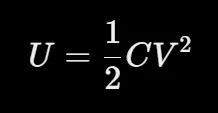
Q6. Write the formula for energy stored in a capacitor.
Current Electricity
Q7. State Ohm's law.
Ohm's law states that the current through a conductor is directly proportional to the potential difference across its ends, provided temperature and other physical conditions remain constant.
V = IR
Q8. What is drift velocity?
Drift velocity is the average velocity acquired by free electrons in a conductor under the influence of an applied electric field.
The relation between current and drift velocity is:
I = neAv_d
Q9. State Kirchhoff's junction rule.
Kirchhoff's junction rule states that the algebraic sum of currents at a junction is zero.
\sum I=0
It is based on the conservation of electric charge.
Moving Charges and Magnetism
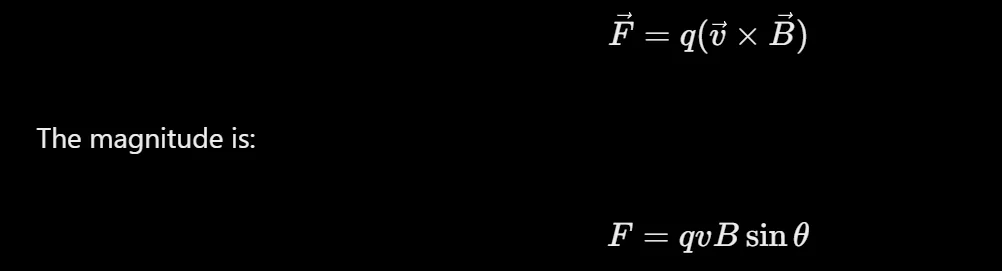
Q10. Write the expression for the magnetic force on a moving charge.
Q11. What is the Biot-Savart law?
The Biot-Savart law describes the magnetic field produced by a small current element.
Q12. What is the working principle of a moving coil galvanometer?
A moving coil galvanometer works on the principle that a current-carrying coil placed in a magnetic field experiences a torque.
The torque causes the coil to rotate, and its deflection is proportional to the current under the appropriate conditions.
Electromagnetic Induction and Alternating Current
Q13. State Faraday's law of electromagnetic induction.
Faraday's law states that the induced EMF in a circuit is equal to the negative rate of change of magnetic flux linked with the circuit.
Q14. What is Lenz's law?
Lenz's law states that the direction of induced current is such that the magnetic field produced by it opposes the change in magnetic flux that causes the current.
Q15. What is the RMS value of alternating current?
The RMS value of alternating current is the equivalent steady current that produces the same heating effect in a resistor over the same time.
Ray Optics and Wave Optics
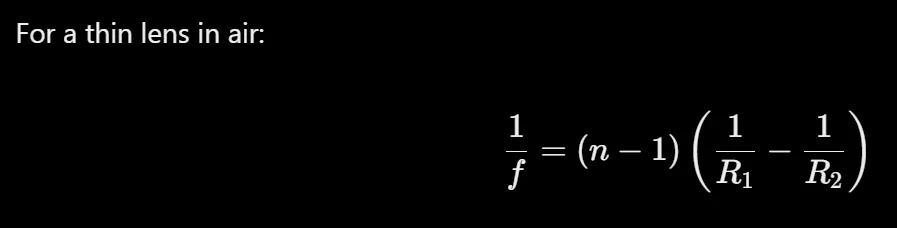
Q16. State the lens maker's formula.
Q17. What is total internal reflection?
Total internal reflection occurs when light travelling from an optically denser medium to a rarer medium is completely reflected back into the denser medium when the angle of incidence exceeds the critical angle.
Q18. What is the fringe width in Young's double-slit experiment?
Here, λ is the wavelength, D is the distance between the slits and screen, and d is the separation between the slits.
Dual Nature, Atoms and Nuclei
Q19. State Einstein's photoelectric equation.
The energy of the incident photon is used to overcome the work function and provide kinetic energy to the emitted electron.
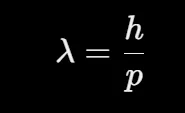
Q20. What is de Broglie wavelength?
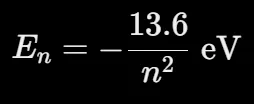
Q21. Write the expression for the energy of an electron in the nth orbit of hydrogen.
Q22. What is mass defect?
Mass defect is the difference between the total mass of the constituent nucleons and the actual mass of the nucleus.
Semiconductor Electronics
Q23. What is a semiconductor?
A semiconductor is a material whose electrical conductivity lies between that of a conductor and an insulator. Its conductivity can be modified by temperature, doping and other conditions.
Q24. What is the difference between p-type and n-type semiconductors?
p-type: Holes are the majority charge carriers.
n-type: Electrons are the majority charge carriers.
Q25. What is a rectifier?
A rectifier is an electronic circuit that converts alternating current into direct current. A diode-based rectifier is commonly used for this purpose.
Important numerical questions for Class 12 Physics
Numerical problems are an important part of Physics preparation. Students should practise questions involving formula application, unit conversions and calculations.
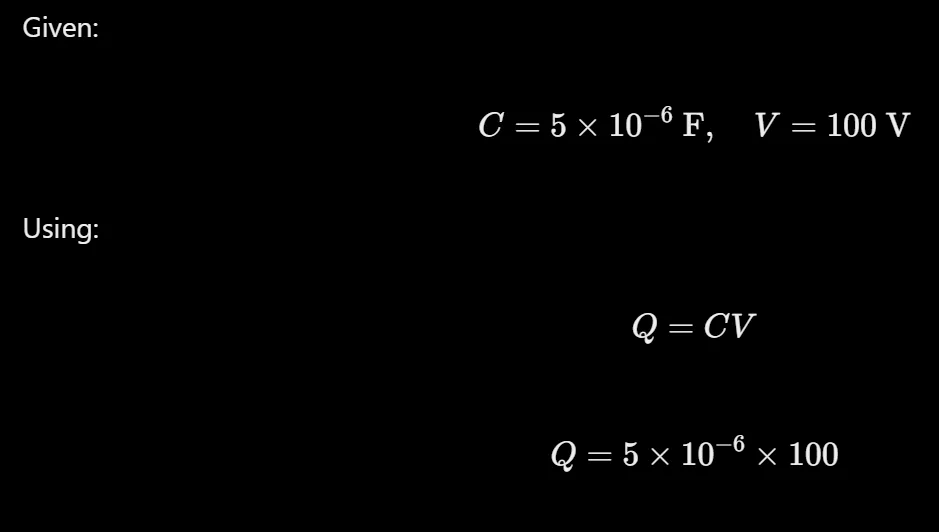
Q26. A capacitor of 5 μF is connected to a 100 V supply. Calculate the charge stored.
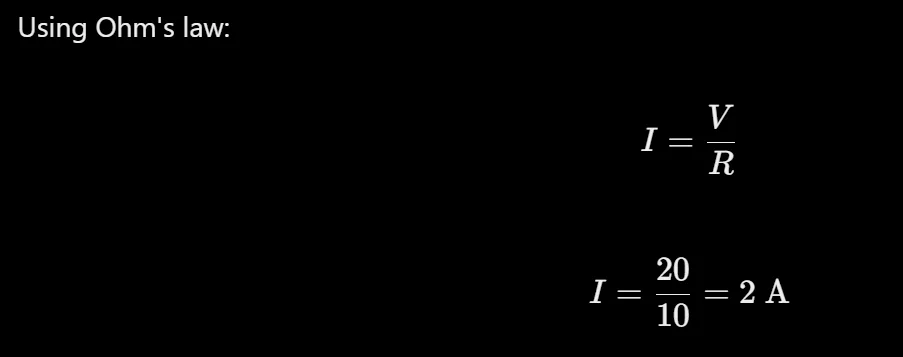
Q27. A resistance of 10 Ω is connected to a 20 V battery. Calculate the current.
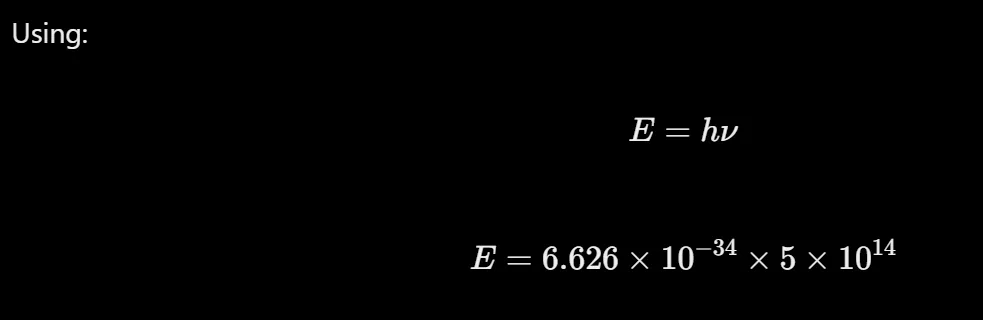
Q28. Calculate the energy of a photon with frequency \(5\times10^{14}\) Hz.
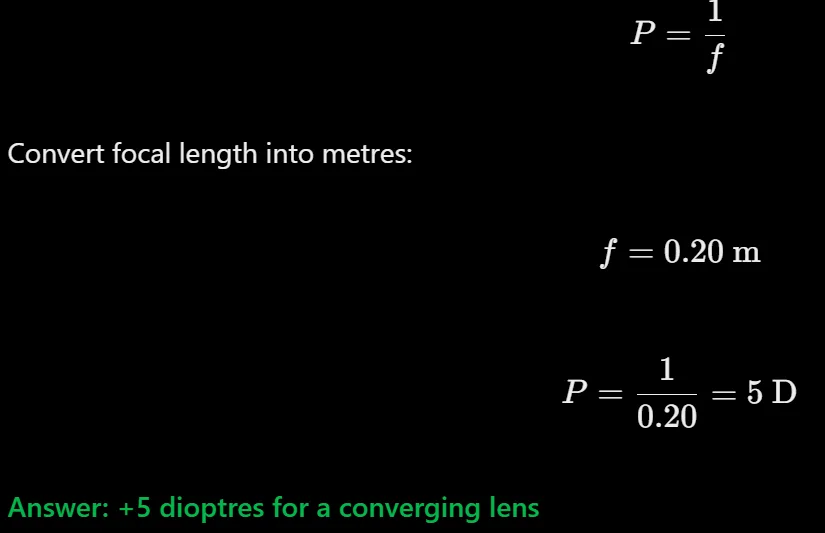
Q29. A lens has a focal length of 20 cm. Calculate its power.
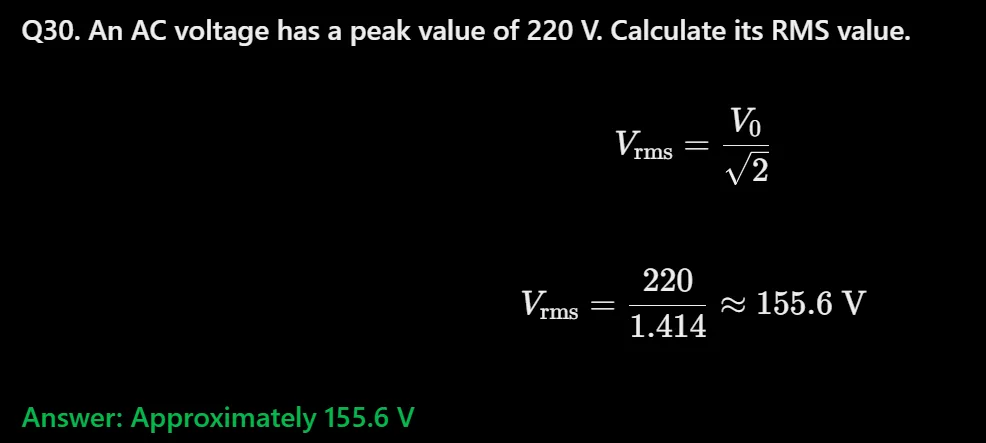
Q30. An AC voltage has a peak value of 220 V. Calculate its RMS value.
Derivations students should practise before the Physics exam
Students should revise the derivations included in their prescribed syllabus and sample-paper preparation. The following are useful areas to practise:
Electric field due to an electric dipole.
Applications of Gauss's law.
Capacitance of a parallel plate capacitor.
Drift velocity and the relation between current and drift velocity.
Magnetic field due to a current-carrying conductor.
Faraday's law of electromagnetic induction.
AC circuit relationships.
Lens formula and ray-optics applications.
Young's double-slit experiment.
Photoelectric equation and related graphs.
How to prepare for Class 12 Physics in the last few days
Revise NCERT: Read definitions, examples, formulas and diagrams from the prescribed textbook.
Solve numericals: Practise problems from Current Electricity, Electrostatics, AC, Optics and other numerical-based chapters.
Write derivations: Don't just read them. Practise writing the steps.
Practise PYQs: Solve previous year question papers to understand the format and difficulty of questions.
Prepare formula sheets: Keep a chapter-wise list of equations and revise it regularly.
Conclusion
CBSE Class 12 Physics preparation becomes more manageable when students focus on conceptual understanding, numerical practice, derivations and previous year questions. The important questions provided above can help students revise major topics and identify areas that need more practice before the 2027 board examination.
Instead of trying to memorise every answer, practise applying formulas, understanding physical principles and presenting solutions in a clear manner. Regular revision and solving sample papers can help students improve accuracy and confidence.